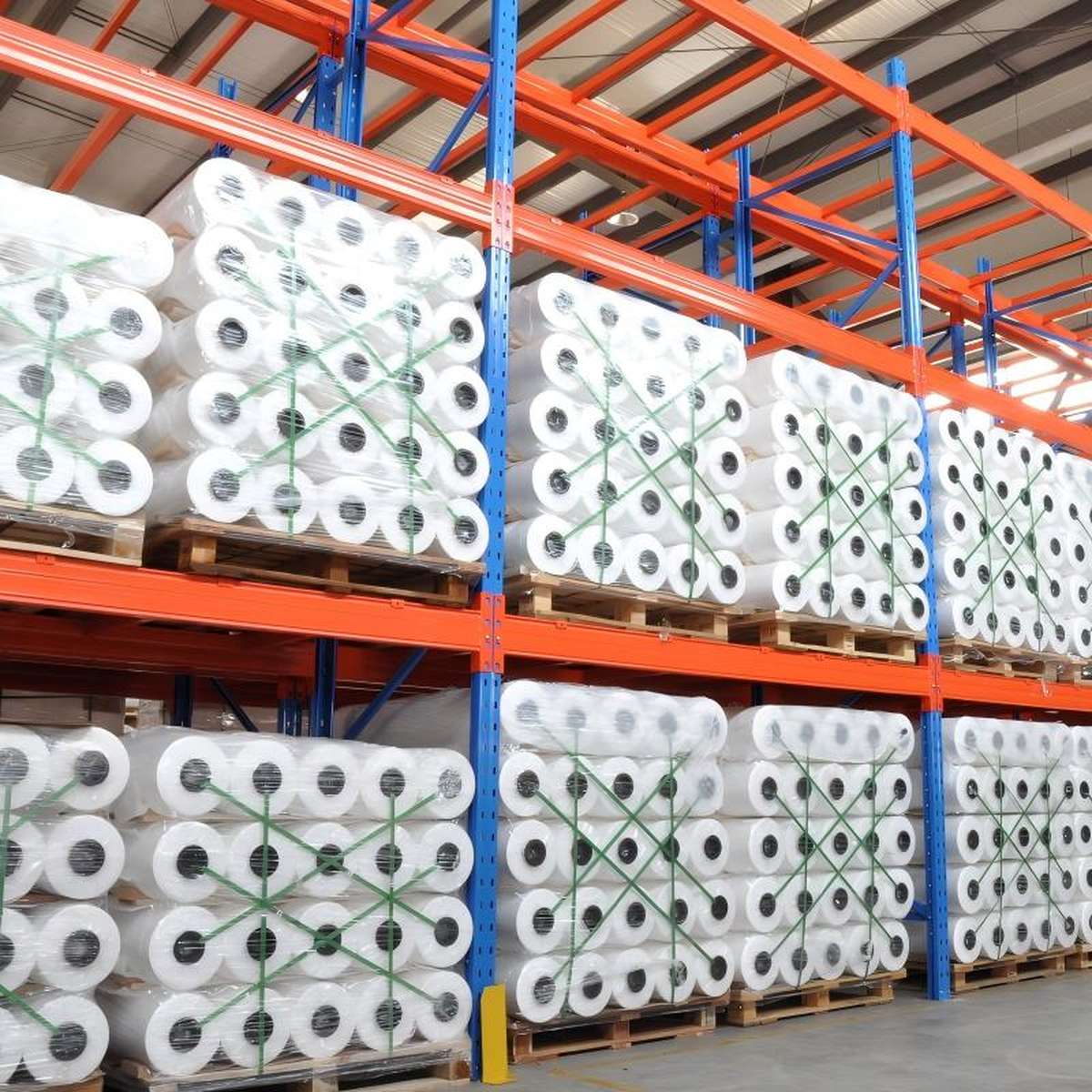
“How many bales will one roll wrap?” is one of the first questions anyone asks when buying silage film, and one of the hardest to answer with a single number. The honest answer is that it depends on the size of the bale, how many layers you apply, how the wrapper is set, the type of film and how carefully the job is done. Change any of those and the count moves, sometimes by a third or more.
That does not mean the question cannot be answered. University extension services have published practical ranges, the weight of a standard roll can be calculated from its dimensions, and every farm can measure its own figure in an afternoon. This guide brings those together so you can estimate silage film per bale, work out how many rolls to order for the season, calculate your real cost per bale, and get more bales from each roll without cutting corners on preservation.
The Quick Answer: Published Ranges
For standard 750 mm wide film on round bales, two widely cited US extension figures give a reliable starting point. University of Kentucky Extension states that one roll covers about 20 to 25 bales at six layers. Texas A&M AgriLife Extension puts it at 25 to 30 silage bales per roll, based on four layers, using about 2 pounds of plastic per bale.
| Layers Applied | Typical Bales per 750 mm Roll | Source |
|---|---|---|
| 4 layers | About 25-30 | Texas A&M AgriLife Extension |
| 6 layers | About 20-25 | University of Kentucky Extension |
These ranges assume typical round bales of roughly 1.2 m (4 ft) width and 1.2 to 1.5 m diameter. Larger bales use more film each, and smaller bales use less. The six-layer figure is the more useful planning number for most farms, because six layers is now the widely recommended default for silage bales that will be stored for months or handled more than once.
Why the Number Varies So Much
Several factors change how many bales a roll will wrap, and it helps to understand each one before comparing your own results with a published figure.
- Bale size. A bigger bale has more surface to cover. Going from a 1.2 m to a 1.5 m diameter bale adds substantially to the surface area, so each bale takes more film even though each holds more forage.
- Number of layers. Six layers use about one and a half times as much film as four. Eight layers, sometimes used for long storage or stemmy crops, use twice as much as four.
- Pre-stretch. Bale film is designed to be stretched as it is applied, usually 55 to 70 percent. Correct stretch spreads each metre of film further; too little stretch wastes film, while too much thins it and invites tears.
- Overlap. The standard is a 50 percent overlap between successive wraps on individual bale wrappers. Inconsistent or excessive overlap uses more film for the same protection.
- Film type. Thinner high-performance and pre-oriented films come in longer rolls. Dairy Australia reports that pre-oriented film wraps about 26 percent more bales from the same-sized reel.
- Operator and conditions. Stops and starts, misshapen bales, wind, roll changes and film breaks all waste material.
How Much Film Is on a Roll?
A roll’s weight can be calculated from its dimensions, which gives a useful way to think about film use per bale. A standard 25-micron roll that is 750 mm wide and 1,500 m long contains about 0.028 cubic metres of polyethylene. LLDPE has a density of roughly 0.92 g per cubic centimetre, so the film on that roll weighs about 26 kg.
If a six-layer round bale uses roughly 1.1 to 1.3 kg of film, that roll will wrap about 20 to 24 bales, which lines up with Kentucky’s published range. At four layers, about 0.9 kg per bale (Texas A&M’s figure of roughly 2 pounds) gives around 28 to 29 bales. The calculation is a cross-check rather than a promise, but it explains why the published ranges look the way they do and lets you compare different roll sizes fairly.
| Silopak Roll (25 µm) | Film Area | Approx. Film Weight | Typical Use |
|---|---|---|---|
| 750 mm x 1,500 m | 1,125 m² | About 26 kg | Standard round bale wrappers |
| 500 mm x 1,800 m | 900 m² | About 21 kg | Wrappers set up for 500 mm film, smaller bales |
| 250 mm x 1,800 m | 450 m² | About 10 kg | Compact and mini bale wrappers |
Weights are calculated from the roll dimensions at a density of 0.92 g/cm³ and exclude the core. Because the 500 mm roll carries about 80 percent of the film area of a 750 mm roll, it will wrap proportionally fewer bales of the same size. The 250 mm roll is designed for compact wrappers that make much smaller bales, so its bales-per-roll figure is not comparable with full-size rolls.
Measure Your Own Film Use per Bale
The most accurate figure for your farm is the one you measure yourself, and it takes very little effort. Weigh a fresh roll on a platform scale before loading it, wrap a set number of bales, say ten, with your normal settings, then remove and weigh the roll again. The difference divided by ten is your film use per bale. Divide the weight of a full roll by that figure and you have your own bales-per-roll number.
Do this once with each bale size and layer setting you use, and repeat it if you change film, wrapper or operator. A few minutes with a scale replaces guesswork with a figure you can plan around, and it often reveals settings problems: if your film use per bale is far above the published ranges, the pre-stretch, overlap or table speed probably needs attention.
How Many Rolls Do You Need for the Season?
Once you know how many bales one roll wraps, ordering is straightforward. Estimate the number of bales you expect to make, divide by bales per roll, and add a margin for waste, breaks and unexpected extra cuts. A 10 percent margin is a sensible starting point.
| Step | Calculation | Example |
|---|---|---|
| 1. Expected bales | Area x bales per hectare per cut x cuts | 300 bales |
| 2. Bales per roll | Measured, or published range | 22 bales at 6 layers |
| 3. Rolls needed | Step 1 divided by step 2 | 300 / 22 = 13.6 |
| 4. Add margin | Step 3 x 1.1, rounded up | 15 rolls |
Wrappers usually carry two rolls at once, so many contractors order in pairs. Ordering before the season matters too, especially when film is imported, since shipping and customs can take weeks.
Working Out Your Real Cost per Bale
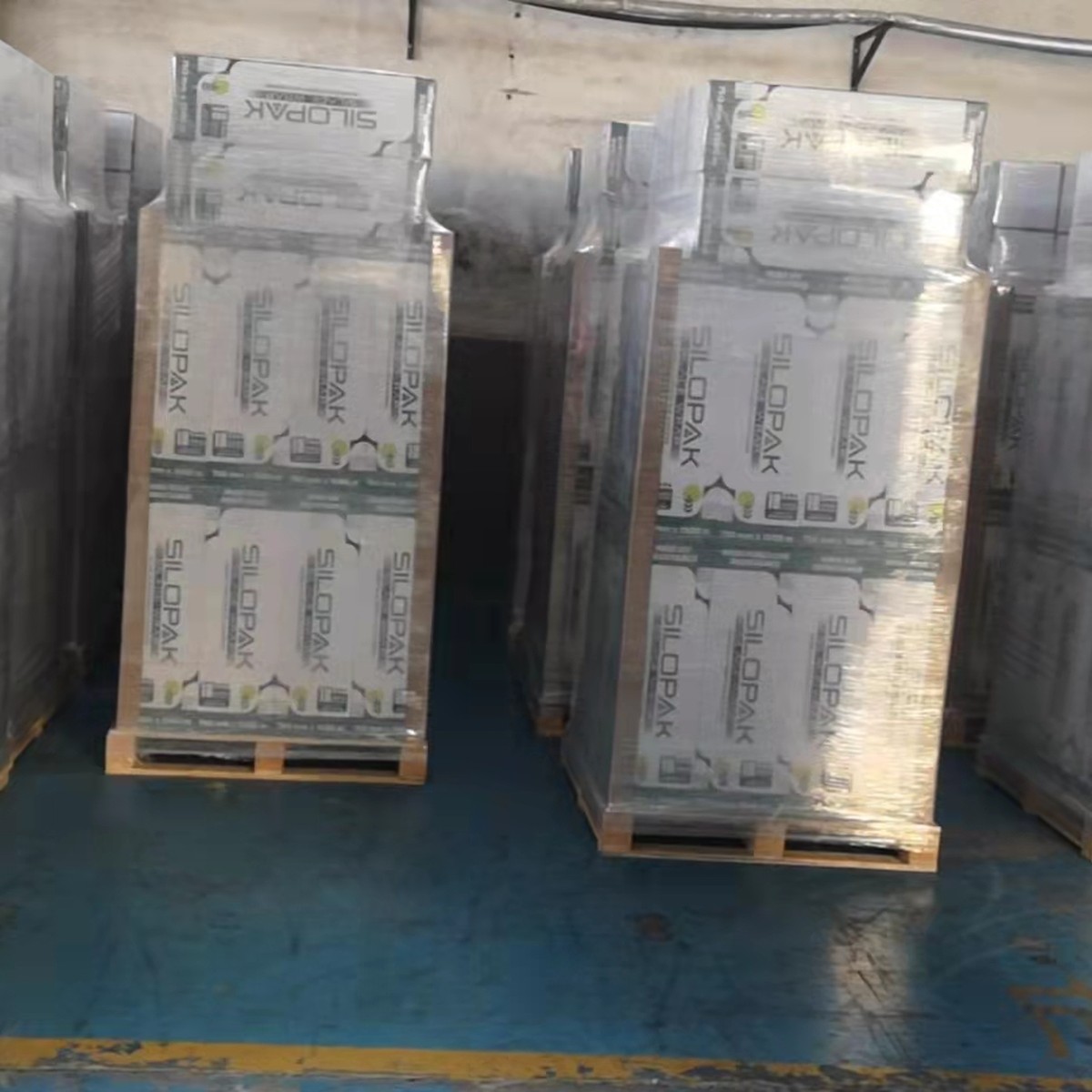
Film cost per bale is simply the price of a roll divided by the number of bales it wraps. Kentucky Extension, for example, estimated $90 to $100 per roll and about $4 to $5 per bale at six layers, while Texas A&M noted that plastic costs can reach up to $8 per bale. Prices have moved since those publications and vary by country, so use your own quotes, but the method holds.
This calculation is also the fairest way to compare suppliers. A cheaper roll that is shorter than labelled, or that breaks and necks down so you need extra rotations, can cost more per bale than a slightly dearer roll that runs cleanly. Comparing on price per bale, rather than price per roll, shows the true difference. Our article on silage film price explains what drives roll prices in the first place.
How to Get More Bales per Roll Safely
The goal is to stop wasting film, not to apply less protection. Cutting layers from six to four to stretch a roll further often costs more in spoiled silage than it saves in plastic. These are the changes that genuinely improve film efficiency.
Set and Check the Pre-Stretch
Pre-stretch rollers wear and drift. Dairy Australia describes a simple check: mark a 10 cm length on the film before it reaches the bale and measure it once applied. At 55 percent stretch it should measure about 15.5 cm, and at 70 percent about 17 cm. Kentucky Extension describes a working range of 50 to 70 percent. If your film is under-stretched, you are using more film than necessary on every bale.
Keep the 50 Percent Overlap
On individual bale wrappers, each wrap should overlap the previous one by half, so that two layers are applied with every full rotation of the bale. Kentucky Extension describes exactly this pattern. Uneven overlap leaves some parts of the bale with too few layers and others with too many, wasting film while still leaving weak spots.
Make Dense, Well-Shaped Bales
Misshapen bales with soft shoulders take more film to cover and are harder to seal. Dense, cylindrical bales with tight edges, held by good net wrap, give the film a smooth surface to grip. Our guide to crop baling net wrap explains how net quality affects bale shape.
Reduce Waste in the Field
Wrap in sheltered spots when it is windy, keep film rolls clean and dry until use, and change rolls carefully so that the tail of one roll is not wasted. Wrapping at or near the storage site also avoids handling damage that would otherwise need patching.
Choose the Right Film Width for the Wrapper
Use the width your wrapper is designed for. Running a narrower film than intended forces more rotations to reach the same number of layers. Our guide to silage film sizes covers the standard widths and lengths, and our article on choosing silage film thickness explains how thickness affects strength and roll length.
How Many Layers Should You Actually Apply?
Film efficiency should never come at the expense of the seal. Kentucky Extension notes that six layers provide adequate oxygen exclusion and that some producers use up to eight for large-stemmed forage. Dairy Australia recommends six layers for round bales that will be handled or transported, plus two extra wraps on stalky crops. Our guide to plastic baler wrappers you can rely on sets out the research on how even small holes lead to large silage losses, which is why six layers is the practical default.
A useful way to think about it: the film on a bale is a small share of the value of the silage inside it. Saving a fraction of a kilogram of plastic per bale is rarely worth the risk of mould on a bale worth many times more. Poor seals also show up later as off-smells at feed-out, which our guide to silage smell explains.
Silopak Silage Film
Silopak, the trading name of Tsingtao Jummos Agricultural Technology Co., Ltd., has manufactured and exported silage film from Qingdao since 2011. Our virgin LLDPE silage film is 25 microns thick, white, and supplied in 750 mm x 1,500 m, 500 mm x 1,800 m and 250 mm x 1,800 m rolls, with a 12-month UV guarantee and field life typically beyond 18 months when the film is intact. We also supply HDPE bale net wrap and our round bale film. Tell us your bale size, layer count and expected number of bales, and our team can help estimate how many rolls you need and quote container pricing.
Frequently Asked Questions about Silage Film per Bale
Q: How many bales does one roll of silage wrap cover?
For a standard 750 mm roll on typical round bales, University of Kentucky Extension gives about 20 to 25 bales at six layers, while Texas A&M AgriLife Extension gives 25 to 30 bales at four layers. Bale size, pre-stretch, overlap, film type and operator technique all change the figure.
Q: How much silage film is used per bale?
Texas A&M estimates about 2 pounds (roughly 0.9 kg) of plastic per bale at four layers. At six layers, a typical round bale uses roughly 1.1 to 1.3 kg. The most accurate figure comes from weighing a roll before and after wrapping a set number of bales on your own farm.
Q: How much does a roll of silage film weigh?
A 25-micron roll that is 750 mm wide and 1,500 m long contains about 26 kg of film, calculated from its dimensions at a density of about 0.92 g/cm³, plus the weight of the core. Texas A&M describes typical US rolls at 50 to 60 pounds.
Q: Does using four layers instead of six save money?
It saves film but often costs more overall. Four layers give less protection against oxygen, and small holes or punctures cause disproportionate silage losses. Six layers is the widely recommended default for bales that will be stored for months or handled more than once.
Q: How can I check if my wrapper is wasting film?
Measure your film use per bale with a scale and compare it with published ranges. Then check pre-stretch by marking 10 cm on the film before application: at 55 percent stretch it should measure about 15.5 cm on the bale, and at 70 percent about 17 cm. Also check that each wrap overlaps the previous one by half.
Q: How many rolls of silage film should I order?
Divide the number of bales you expect to make by your bales per roll, then add about 10 percent for waste and extra cuts. For 300 bales at 22 bales per roll, that is about 15 rolls.
Reviewed by Sue Su, Marketing Director of Silopak, on 23 November 2026. Bales-per-roll figures are planning estimates; weigh your own rolls to find the true number for your bales and wrapper settings.