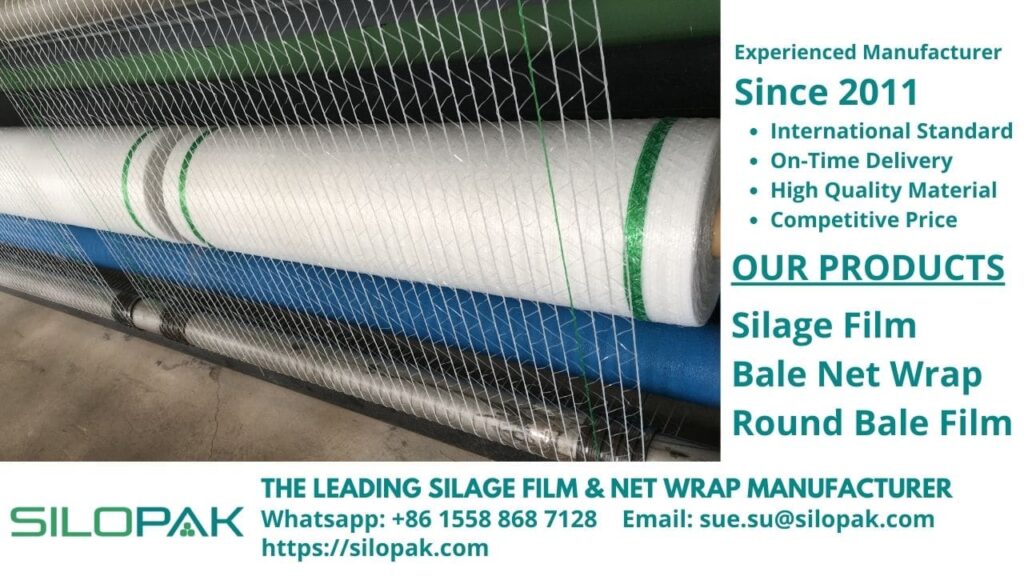
Net wrap has one job above all others: to hold a dense bale together through baling, handling, stacking, transport, and months of storage without giving way. A wrap that tears fails at that job, and a torn wrap means a lost bale. This is why tear resistance is the single most important quality in net wrap, and this guide explains what actually makes net wrap tear resistant and how to choose it.
Why Tear Resistance Matters So Much
A round bale is heavy and dense, and it exerts constant outward pressure on the wrap holding it. On top of that, the wrap is stressed during baling, gripped by tractor forks during handling, dragged and stacked, and exposed to months of UV and weather.
If the net tears at any point in that chain, the bale loses its shape, sheds material, and, if it is a silage bale wrapped in film over the net, loses the structural base the film seal depends on. Torn net wrap is not a cosmetic problem; it is the start of feed loss. Tear resistance is what buys reliability through the whole life of the bale.
What Actually Makes Net Wrap Tear Resistant
Tear resistance is not luck or thickness alone. It comes from three things working together.
| Factor | Why It Matters |
|---|---|
| Resin grade | Higher-grade virgin HDPE produces stronger tape per unit of weight; recycled resin is weaker and tears more easily |
| Tape strength and knit quality | The net is knitted from tapes; even, consistent knitting with no weak points distributes load evenly |
| UV stabilization | UV degradation is the leading cause of net becoming brittle and tearing in storage; proper stabilizers prevent it |
Note what is not on that list: raw thickness. A cheap, heavy net made from low-grade resin can still tear more readily than a lighter net made from high-grade, well-stabilized material. Tear resistance is about material quality and construction, not just how much plastic is used.
Net Wrap Versus Twine
Net wrap is the tear-resistant successor to baler twine, and the comparison shows why it dominates.
Net wrap binds a bale in just a few turns, while twine needs 15 to 30 wraps to achieve a comparable hold. That difference translates into roughly 30% more bales wrapped per hour, along with fuel savings and less wear on the baler from fewer revolutions per bale. It also gives more even coverage, which reduces material loss from the bale surface.
Net wrap costs more than twine, often two to three times as much per bale, but for operations storing bales outdoors or handling them frequently, the faster wrapping, reduced losses, and better weather protection generally justify the premium. Twine remains a valid choice for smaller operations and sheltered storage.
“Buyers sometimes equate a heavier net with a stronger net, and it is not that simple. We have tested cheap heavy net against quality lighter net, and the quality net holds better because the strength is in the resin grade and the knit, not the weight. A net that tears in the field has failed no matter how heavy it felt on the roll. Tear resistance is what you are actually paying for.”
— Sue Su, Marketing Director of Silopak
How Many Layers of Net Wrap?
Layer count depends partly on net quality: a genuinely tear-resistant net does its job in fewer layers than a weak one, which needs extra layers just to reach basic security.
As a general guide, 2.5 to 4 layers of net wrap suit most bales. Denser or coarser material that puts more outward pressure on the wrap, or bales that will be handled and transported heavily, benefit from 4 to 5 layers. Your baler type matters too, since a full-round baler and a combination baler-wrapper apply net differently.
It is worth being clear that net wrap layers and film layers are separate things for separate purposes. Net wrap holds the bale; on a dry hay bale, net wrap is all you need. For silage bales, film is applied over the net to create the airtight seal, and that film is applied at a different layer count, typically four to six layers, with two extra for bales transported frequently. Do not confuse the two: more net layers do not seal a bale, and film is not a substitute for the structural hold of net.
Net Wrap and Film Together on Silage Bales
For round bale silage, net wrap and film work as a system, each doing its own job.
The net wrap goes on first, compacting and holding the bale in a tight, regular shape. Then silage film is applied over it in airtight layers to exclude oxygen. The net gives the film a smooth, stable base with fewer protruding stems, which helps the film seal cleanly and reduces the small punctures that stray stalks can cause.
One clarification worth making, since it is often muddled: this layering protects the bale from water and oxygen, it does not add moisture. The goal of wrapping is to keep water and air out, preserving the forage, not to moisten it.
Choosing and Storing Tear-Resistant Net
- Choose virgin, UV-stabilized HDPE. This is the foundation of genuine tear resistance and field longevity.
- Match the width to your baler. Correct width means the net covers the full bale face, including the shoulders where tearing and exposure often start.
- Check the knit. Even, consistent mesh with no thin spots holds load reliably.
- Store rolls out of the sun before use. Even UV-stabilized net degrades if spare rolls sit in direct sunlight for long periods.
- Store finished bales on a clean, dry surface. Stubble and stones puncture and tear net from below.
Silopak manufactures tear-resistant bale net wrap from virgin UV-stabilized HDPE, with a 12-month UV guarantee and a knit built to hold dense bales through handling and storage. For guidance on matching net wrap to your machine, see our guide on net wrap for round balers.
Frequently Asked Questions
Q: What makes net wrap tear resistant?
Three factors together: the grade of HDPE resin, the tape strength and knit quality, and UV stabilization. Higher-grade virgin HDPE produces stronger tape for its weight, even knitting distributes load without weak points, and proper UV stabilizers stop the net becoming brittle in storage. Notably, thickness alone does not determine tear resistance; a heavy net from low-grade resin can tear more easily than a lighter net made from quality material. Tear resistance is about material and construction, not weight.
Q: How many layers of net wrap should I use?
Generally 2.5 to 4 layers for most bales, rising to 4 to 5 layers for dense or coarse material that exerts more pressure, or for bales handled and transported heavily. A genuinely tear-resistant net achieves security in fewer layers than a weak one. Note that net wrap layers are separate from silage film layers: net wrap holds the bale, while film, applied at four to six layers, creates the airtight seal for silage. They are not interchangeable.
Q: Is net wrap better than twine?
For most operations storing bales outdoors or handling them often, yes. Net wrap binds a bale in a few turns versus 15 to 30 for twine, giving roughly 30% more bales per hour plus fuel savings and less baler wear. It also gives more even coverage and better weather protection. Net wrap costs two to three times more than twine, but the faster wrapping and reduced losses usually justify it. Twine remains reasonable for small operations with sheltered storage.
Q: Does wrapping a bale add moisture to the hay?
No, the opposite. Wrapping keeps water and, for silage film, oxygen out; it does not add moisture. The purpose is to protect the forage from rain and air that would spoil it. For dry hay, net wrap holds the bale and dry covered storage keeps it sound. For silage, film seals out oxygen so fermentation preserves the wet forage. Neither is intended to moisten the feed, and any wrap that let water in would be failing at its job.
Reviewed by Sue Su, Marketing Director of Silopak, on 2 October 2026. This guide has been revised to focus on what genuinely makes net wrap tear resistant and to correct the description of wrapping as adding moisture.