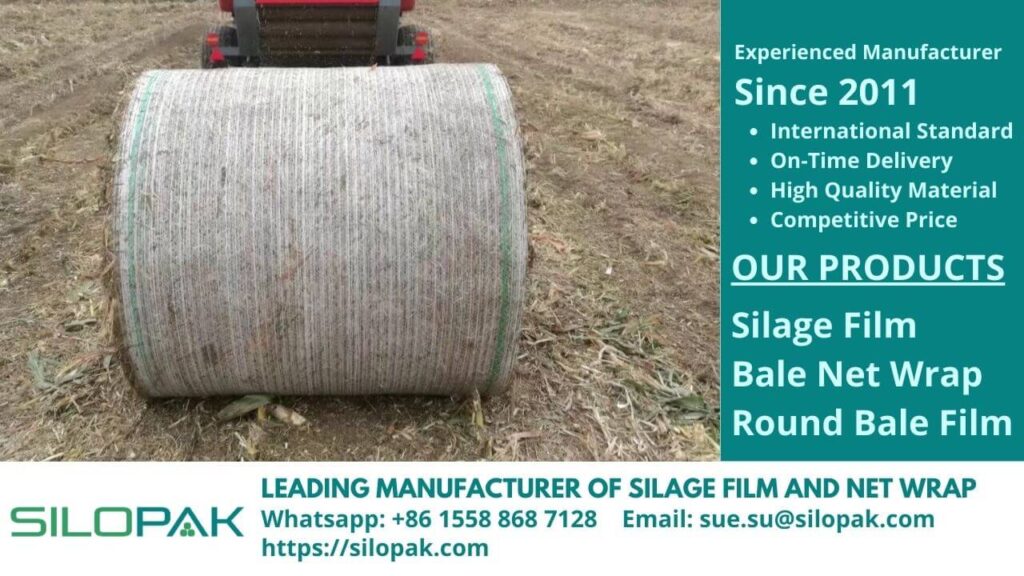
Net wrap is considered standard equipment when it comes to storing hay and forage. It not only secures the fodder into a stable shape but also makes it far easier to handle and transport. For round baler operators in particular, choosing the right net wrap is what determines whether bales hold their form through handling, stacking, and storage, or whether material is lost along the way. This guide focuses specifically on net wrap for round balers, how to match it to your machine, and how to apply it for the best results.
Why Round Balers Need the Right Net Wrap
Round balers are typically used by farmers managing larger land areas and higher livestock numbers, where speed and bale durability matter most. Unlike small square bales that can be handled by a single person, round bales are moved by machinery and stacked outdoors or in sheds. This makes the net wrap a critical component, because it has to hold a heavy, dense bale together through repeated mechanical handling.
When net wrap fails to hold a bale in shape, the consequences are direct: material falls and is lost during rolling and transport, bales deform when stacked, and the exposed surface becomes vulnerable to spoilage. Choosing net wrap that is correctly matched to your round baler eliminates most of these losses at the source.
Matching Net Wrap to Your Round Baler
The single most important factor when selecting net wrap for a round baler is width compatibility. The net wrap width must match the width of your baler’s chamber so that the net covers the full face of the bale, including the edges, as it is formed. Net wrap that is too narrow leaves the bale shoulders exposed and poorly bound, while wrap that is too wide can cause feeding problems inside the baler mechanism.
| Net Wrap Width (m) | Roll Length (m) | Best Suited Round Baler Type |
|---|---|---|
| 0.52 | 2000 | Compact and smaller chamber round balers |
| 1.05 | 2000 | Standard round balers |
| 1.23 | 3600 | High-volume round balers, fewer roll changes |
| 1.25 | 3000 | Standard to large round balers |
All Silopak net wrap is made from 100% high-density UV-stabilized polyethylene, comes with a 12-month guarantee against UV degradation, and includes roll carry handles for easier handling. For round baler operators producing high volumes, the longer 3600m and 3000m rolls reduce the number of mid-field roll changes, which directly improves baling efficiency during a tight harvest window. You can view the full net wrap supplier specifications for complete product details.
How Many Net Layers Should You Apply on a Round Bale?
The number of net layers applied per bale affects both bale security and how many bales you get from each roll. More layers mean a more secure, better-protected bale but fewer bales per roll. The right choice depends on how and how long the bales will be stored.
| Layers per Bale | Bale Security | Recommended Storage Scenario |
|---|---|---|
| 2 layers | Standard hold | Short-term, sheltered or indoor storage |
| 2.5 layers | Improved hold | General outdoor storage, moderate handling |
| 3 layers | Maximum hold | Long-term outdoor storage, transport, rough handling |
For round bales that will be stacked outdoors or transported over distance, three layers is recommended to maintain bale integrity. For bales kept in a shed and used quickly, two layers is usually sufficient and more economical.
“With round balers, the most common issue we troubleshoot is operators buying net wrap on price alone without checking that the width matches their chamber. A mismatched width leaves the bale shoulders exposed, and that is exactly where spoilage and material loss start. We always ask for the baler model and chamber width first. Get that right, and a quality net wrap will hold the bale through everything the field and the stack can throw at it.”
— Sue Su, Marketing Director of Silopak
Net Wrap Application Tips for Round Balers
Correct application is just as important as choosing the right product. The following practices help round baler operators get the most from their net wrap.
- Set the correct net tension. Net wrap should be applied under consistent tension so the bale is firmly and uniformly bound from edge to edge. Loose application leads to a soft bale that loses shape.
- Confirm full-width coverage. The net should reach the full width of the bale face, covering the shoulders. Partial coverage leaves the bale ends exposed to weather and handling damage.
- Check the roll seating. Ensure the net wrap roll is seated correctly on the baler spindle so it feeds evenly without bunching or drifting to one side.
- Monitor for tears at the dispenser. Inspect the net as it feeds, since a damaged roll edge can cause repeated tears that compromise bale binding.
- Store rolls properly. Keep spare net wrap rolls out of direct sunlight and away from sharp objects to protect them before use.
When to Use Net Wrap vs Silage Film on Round Bales
Net wrap holds a round bale in shape but does not create an airtight seal. For dry hay stored under shelter, net wrap alone is sufficient. However, if you plan to make round bale silage or store bales in the open through changing weather, net wrap is only the first step. In that case, the bale is wrapped first in net wrap to hold its shape, then sealed in multiple layers of silage wrapping film to create the anaerobic environment needed for fermentation and to protect against spoilage. Using silage film allows you to preserve and even ferment the forage for extended periods, securing your feed stock through the dry season.
Where to Source Net Wrap for Round Balers
The price and availability of net wrap for round balers can vary depending on geographical location, season, order quantity, and product quality. Purchasing directly from a manufacturer rather than through a distributor or retailer generally provides better pricing, more consistent supply, and the ability to confirm that the net wrap width and specification match your specific round baler.
As a manufacturer, Silopak supplies net wrap for round balers directly from the factory in China, with export experience to Australia, New Zealand, Canada, and other markets. Buying directly also gives you access to product consultation, so you can confirm the correct width and roll length for your machine before ordering rather than guessing.
Frequently Asked Questions about Net Wrap for Round Balers
Q: What width of net wrap do I need for my round baler?
The net wrap width must match your round baler’s chamber width so that the net covers the full bale face including the shoulders. Silopak net wrap is available in 0.52m, 1.05m, 1.23m, and 1.25m widths to fit different round baler models. Using a width that is too narrow leaves the bale ends exposed and poorly bound, while a width that is too wide can cause feeding problems inside the baler. Always check your baler specification or provide the machine model so the correct width can be confirmed before ordering.
Q: How many layers of net wrap should I use on a round bale?
For round bales stored outdoors or transported over distance, three layers is recommended to keep the bale secure and protected. For bales kept in a shed and used within a short period, two layers is usually adequate and more cost-efficient. The trade-off is that more layers improve bale security but reduce the number of bales you can wrap per roll. Match the number of layers to your storage conditions and handling intensity.
Q: Can I use net wrap to make round bale silage?
Net wrap alone cannot make silage because it does not create an airtight seal. For round bale silage, net wrap is applied first to hold the bale in shape, then the bale is wrapped in several layers of LLDPE silage film to create the anaerobic environment required for fermentation. Net wrap and silage film work together in round bale silage production, each performing a different role. If you only need to store dry hay under shelter, net wrap on its own is sufficient.
Q: Why does net wrap sometimes fail to hold a round bale together?
The most common causes of net wrap failure on round bales are using a width that does not match the baler chamber, applying insufficient net tension, applying too few layers for the storage conditions, or using low-quality net wrap made from recycled material with weak tensile strength. Bale shoulders left exposed by narrow wrap are a frequent failure point. Ensuring correct width, consistent tension, adequate layers, and quality HDPE net wrap addresses nearly all of these issues.
Q: Is it cheaper to buy net wrap for round balers directly from a manufacturer?
Yes. Buying directly from a manufacturer such as Silopak removes the distributor and retailer margins, lowering the per-roll cost, especially on bulk orders. Direct purchasing also lets you confirm the correct width and roll length for your round baler before ordering, ensures consistent supply for repeat orders, and gives you access to product specifications and consultation. For farms and contractors producing large volumes of round bales each season, direct manufacturer purchasing delivers meaningful savings over time.
Q: How should I store spare net wrap rolls before use?
Store spare net wrap rolls in a dry area out of direct sunlight, as prolonged UV exposure before use can begin to degrade the material even though the net is UV-stabilized for in-field use. Keep rolls away from sharp objects, chemicals, and heat sources. Storing rolls horizontally on a clean rack or shelf prevents edge damage that could cause feeding problems or tears when the roll is later loaded onto the baler.
This article was last reviewed and updated by the Silopak Editorial Team on June 9, 2026. Our team periodically revisits published content to ensure accuracy, relevance, and alignment with current best practices in livestock feed management and silage preservation.