Oat straw has a real place in horse feeding, but it is widely misunderstood, and some of the advice circulating about it is not just wrong but potentially dangerous. This guide covers what oat straw actually is, how to feed it to horses safely, and how to bale and store it so it holds its value.
First, Know What You Are Feeding
Oat straw and oat hay are not the same thing, and the difference matters enormously.
| Oat Straw | Oat Hay | |
|---|---|---|
| What it is | The dry stem left after the grain has been harvested | The whole plant cut green, before grain maturity |
| Protein | Low, roughly 3 to 5% | Higher, seed head still present |
| Energy and sugar | Low | Higher |
| Fiber | Very high | High but more digestible |
| Main use for horses | Low-calorie fiber to dilute the ration; bedding | A forage feed in its own right |
This distinction is the source of a lot of confusion. If you harvest the crop while the stems and leaves are still green and the seed heads are full, you have made oat hay, not oat straw. Both have uses, but they are not interchangeable, and their nutritional value is very different.
Why Oat Straw Is Fed to Horses
Here is the part that often gets stated backwards. Oat straw is valuable to horse owners precisely because it is low in calories, sugar, and energy, not because it is nutritious.
Horses are built for continuous, slow intake of high-fiber, low-energy forage. Many domestic horses, especially those in light work or prone to weight gain, take in more energy than they need. Oat straw lets you keep the gut full and the chewing time long while cutting the calorie load of the ration. It is a dilution feed and a fiber source, not an energy feed.
You will sometimes read that straw is high in water-soluble carbohydrates. It is not. Straw is characteristically low in sugar, which is exactly what makes it useful for horses that need their sugar intake controlled. Any advice built on the opposite assumption should be treated with suspicion.
Feeding Oat Straw Safely
Straw can be fed to horses successfully, but there are genuine risks, and they deserve to be stated plainly rather than glossed over.
Impaction colic is the main danger
This is the risk that matters most, and it is often left out entirely. Straw is highly fibrous and poorly digestible. Introduced too quickly, fed in excess, or fed to a horse that cannot chew it properly, it can form an impaction in the gut. Impaction colic is serious and can be fatal.
Three things reduce this risk substantially:
- Introduce it slowly. Increase the proportion over one to two weeks rather than switching abruptly. The hindgut microbial population needs time to adapt.
- Keep water freely available at all times. Adequate hydration is essential for moving fibrous material through the gut. This is not optional when feeding straw.
- Check the teeth. A horse that cannot chew straw properly cannot safely eat it. Older horses and those with dental problems are at higher risk, and this is a common thread in straw impaction cases.
Keep it to a sensible proportion
A common guideline is to limit straw to around 30% of the forage ration, though the right figure depends on the individual horse, its workload, and its dental condition. Straw should complement the forage ration, not replace it.
Consult your vet
Before making straw a significant part of any horse’s diet, particularly for an older horse, one with dental issues, or one with a history of colic, speak with your veterinarian. The general guidance here does not substitute for advice about your specific animal.
Nitrate: A Real Toxicity Risk, Not a Taste Problem
This deserves its own section because the misinformation around it is genuinely hazardous.
Oats are a well-known nitrate accumulator, particularly when the crop grows under stress from drought, frost, or heavy nitrogen fertilization. High nitrate in forage is not a palatability issue or a sign that the feed is dry. It is a toxicity issue.
In the animal, nitrate is converted to nitrite, which binds to hemoglobin and forms methemoglobin. Methemoglobin cannot carry oxygen. In severe cases the animal effectively suffocates, and death can occur within hours. The historical name for this in the 1930s was literally “oat hay poisoning,” because oats harvested for forage during drought years killed so much livestock.
An important nuance: horses are far less susceptible than ruminants. Horses are hindgut fermenters, and the conversion of nitrate to nitrite happens to a much lesser degree than it does in a rumen. Nitrate poisoning in horses is genuinely rare. But if you are also feeding oat straw or oat hay to cattle, sheep, or goats, the risk is serious, and those animals can die from feed a horse would tolerate.
The practical guidance is straightforward. Keep total dietary nitrate below the commonly cited threshold of 0.5%. If the crop was grown under drought stress, heavily fertilized, or frost-damaged, have it tested before feeding it, particularly to ruminants. There are no visual signs of high nitrate in forage. You cannot see it, smell it, or taste it. Testing is the only way to know.
Baling and Storing Oat Straw

How you bale depends entirely on what you are making.
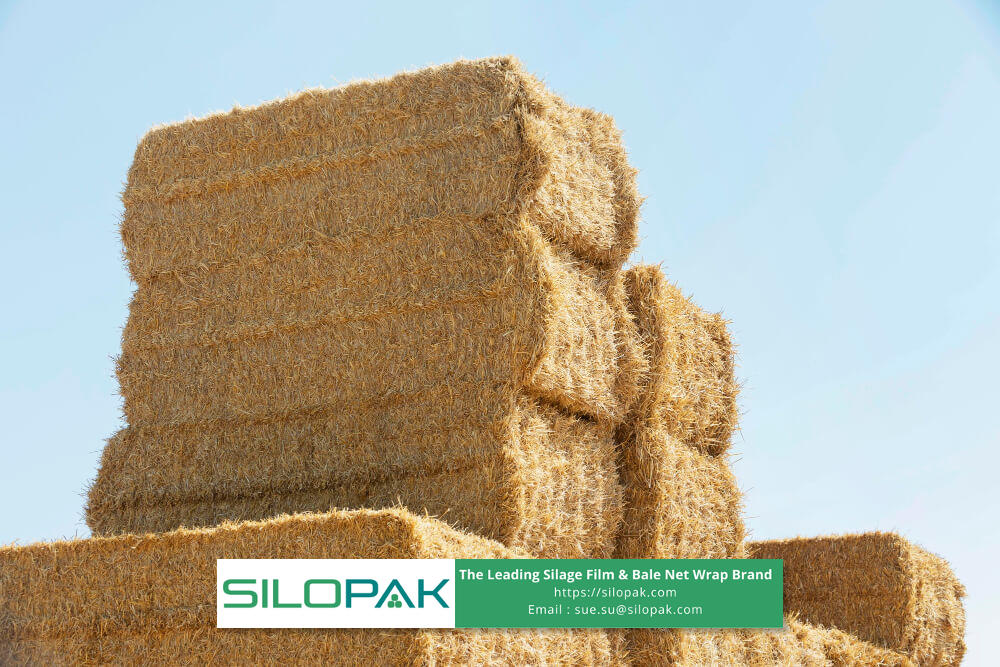
Dry oat straw is baled dry, at roughly 14 to 18% moisture, and preserved by dryness. It needs net wrap or twine to hold the bale together, and dry storage. It does not need an airtight film seal, because there is no fermentation to protect. Baling straw while damp risks mold and heating.
Oat haylage, made from the crop cut green and fermented, is a different product entirely. It is baled at high moisture, then wrapped in multiple airtight layers of film so that anaerobic fermentation can preserve it. Here the layer count genuinely matters: too few layers and oxygen gets in, fermentation fails, and the bale spoils. Four to six layers is the standard range, and skimping is a false economy.
Some advice suggests the number of layers does not matter as long as the machine works well. That is not correct. On a wrapped, fermented bale, the film layers are the seal, and the seal is the entire preservation mechanism.
For the baling machinery itself, our group company Jummos manufactures balers and baler wrappers. Silopak manufactures the consumables that go with them: silage film, bale net wrap, and baler twine. Our film is produced from premium virgin resin and holds its seal for 18 months or more under real outdoor conditions.
Frequently Asked Questions
Q: Is oat straw nutritious for horses?
Not particularly, and that is precisely why it is useful. Oat straw is low in protein, sugar, and energy, and very high in fiber. Its value lies in providing chewing time and gut fill without adding calories, which suits horses that are overweight, in light work, or need their sugar intake controlled. It is a dilution feed and a fiber source. It should complement a horse’s forage ration, not serve as its main nutritional foundation.
Q: Can feeding straw give a horse colic?
Yes, this is the main risk. Straw is highly fibrous and poorly digestible, and it can form an impaction in the gut if introduced too quickly, fed in excess, or fed to a horse that cannot chew it properly. Impaction colic is serious and can be fatal. Reduce the risk by introducing straw gradually over one to two weeks, ensuring clean water is always freely available, checking the horse’s dental health, and keeping straw to a sensible proportion of the forage ration. Consult your vet before making straw a major part of any horse’s diet.
Q: Is high nitrate in oat straw dangerous?
Yes, but the risk differs sharply by species. High nitrate is a toxicity problem, not a palatability one. Nitrate converts to nitrite in the animal, which binds hemoglobin and prevents it carrying oxygen. Ruminants such as cattle, sheep, and goats are highly susceptible and can die from it. Horses, being hindgut fermenters, are far less susceptible, and nitrate poisoning in horses is rare. If your oat crop grew under drought stress, frost damage, or heavy nitrogen fertilization, have it tested, especially before feeding it to ruminants. High nitrate cannot be seen, smelled, or tasted.
Q: Do I need to soak oat straw before feeding it?
Generally no, provided the horse has good teeth and constant access to water. Soaking is normally done to reduce sugar content for horses with metabolic conditions, and straw is already naturally low in sugar, so there is little to remove. For horses with dental problems or a history of impaction, discuss soaking or chopping with your vet, as those horses have difficulty processing fibrous material regardless.
Q: How many film layers does a wrapped bale need?
For fermented bales such as haylage, four to six layers is the standard range. The layers are what create and maintain the airtight seal, and the seal is what makes fermentation possible. Too few layers allows oxygen in, fermentation fails, and the bale spoils. Dry straw baled at correct moisture does not need an airtight film seal at all, only net wrap or twine to hold its shape, plus dry storage.
Reviewed by Sue Su, Marketing Director of Silopak, on 3 August 2026. This guide has been substantially revised to correct the description of nitrate as a palatability issue rather than a toxicity risk, and to add the impaction colic guidance that safe straw feeding requires. It is general information only and does not replace veterinary advice for your individual animals.