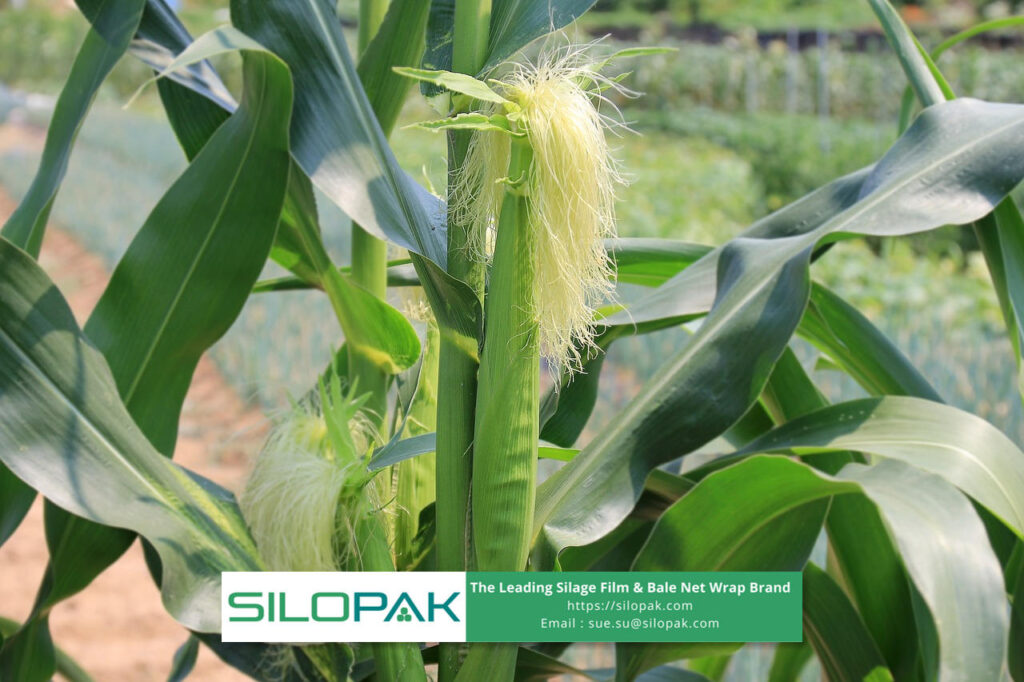
Corn stalks are the most abundant crop residue on most arable farms, and they are too valuable to waste. Once the grain is off, the stalks, leaves, husks, and cobs left behind can feed cattle through winter, serve as bedding, or be baled and sold. Their feed value is well below quality forage such as alfalfa, but used correctly they extend the grazing season and cut feed costs substantially.
Used carelessly, however, corn residue can also make cattle very sick. This guide covers both sides.
Grazing Corn Residue: Read the Safety Section First
Turning cattle out onto harvested corn ground is one of the cheapest ways to extend grazing into winter. It is also where most of the risk sits, and the risks are rarely mentioned.
Grain overload is the biggest danger
Cattle do not graze corn residue evenly. They eat what they like best first, and what they like best is dropped grain, followed by husks and leaves. The stalks themselves come last.
If the combine left significant grain on the ground, cattle will find it and gorge on it. A sudden load of grain in the rumen causes acid to build faster than the animal can buffer it, and the result is acidosis. Mild cases cut intake and performance. Severe cases kill.
Before turning cattle out, walk the field and assess how much grain is on the ground. If there is more than roughly a couple of bushels per acre, either delay grazing, limit access, or introduce cattle gradually over several days rather than all at once. Never turn hungry cattle onto freshly harvested corn ground.
Nitrate accumulation
Corn stalks can accumulate nitrate, particularly when the crop grew under drought stress or heavy nitrogen fertilization. Nitrate converts to nitrite in the rumen, binds to hemoglobin, and prevents the blood carrying oxygen. It can be fatal.
Concentration is highest in the lower third of the stalk, which is also the part cattle eat last, so risk rises as grazing progresses and the good material runs out. If the crop was drought-stressed, have the residue tested before grazing.
Protein is the limiting nutrient
Corn stover contains only around 5% crude protein, which is far below what cattle need. More to the point, rumen microbes need protein to digest the fibrous stalk material at all. Without supplementation, cattle cannot extract the energy that is there, so intake and condition both fall. Protein supplementation is not optional when grazing corn residue.
Practical Grazing Guidance
Snow depth is a useful practical limit. Cattle can generally graze corn residue effectively in snow up to roughly 2 to 8 inches deep. Beyond that, they cannot reach the material reliably, and it is time to bring them home and feed baled forage or a mixed ration.
Strip grazing with temporary fencing works far better than opening the whole field at once. It forces more even use of the residue, prevents cattle from selectively cleaning up all the grain in the first days, and stretches the resource further.
“Corn residue is genuinely good value, but we hear from farmers who turned cattle out onto a field with a lot of spilled grain and ended up with sick animals. The residue itself is not the problem. The problem is what the combine left behind. Walk the field first. That one habit prevents most of the trouble.”
— Sue Su, Marketing Director of Silopak
How Much Residue Should You Actually Remove?
There is a temptation to bale every last stalk, and it is worth resisting.
Corn residue is not waste. Left on the field, it protects the soil surface from erosion, returns organic matter and nutrients including potassium, nitrogen, phosphorus, and sulfur, and maintains the soil structure that next year’s crop depends on. Strip the field bare year after year and soil quality declines measurably.
A sustainable removal rate is generally in the range of 30 to 50% of the residue, and less on sloping or erosion-prone ground. On flat, high-yielding fields with good soil, the higher end may be defensible. On slopes, on light soils, or where organic matter is already low, take less or none.
Typical yields run around 4 to 5 tonnes of residue per hectare, with roughly one ton of residue produced per 40 bushels of corn. Plan your baling against a removal rate you can justify agronomically, not against how many bales the field could theoretically produce.
Should You Leave Stalks in the Field Instead?

Partly, yes, and that is the point above. But leaving all of it scattered has drawbacks too.
Heavy residue cover can harbour pests, including sap beetles, and can interfere with the following season’s planting and seedbed preparation. Loose stalks also blow around, and a strong, fibrous corn stalk is entirely capable of puncturing a tyre.
The sensible answer is neither extreme. Remove a defensible proportion for feed or bedding, leave the rest to protect and feed the soil, and manage the residue that stays rather than ignoring it.
Baling Corn Stalks
Corn stalks can be baled with a conventional baler, though the material is abrasive and demanding on the machine. A stalk chopper or shredder run ahead of the baler cuts the stalks and leaves to a more manageable size and helps the baler feed evenly.
One clarification, since this is often muddled: the baler is a machine. The net wrap and film are the consumables that go on it. Our group company Jummos manufactures the balers and baler wrappers. Silopak manufactures the bale net wrap, silage film, and baler twine from premium virgin resin.
A practical note on moisture: corn stover after grain harvest is often already dry, and dry stalks bale well and store well. If you are baling greener material, it must either be dried before baling or wrapped airtight and fermented. Baling damp material and leaving it exposed is how you get mold and heating.
Corn Stalks as Bedding
With wheat straw and sawdust becoming scarcer and more expensive in many regions, corn residue is an increasingly practical bedding material, and its abundance is the whole appeal.
Shred or chop the stalks, ensure they are properly dry, then bale. Dry, chopped corn residue is absorbent and comfortable, and for many operations it costs a fraction of purchased bedding.
Selling Corn Stalk Bales
Once you can produce bales reliably, selling the surplus is a straightforward extension. You know what your own herd needs, and anything beyond that is saleable.
Pricing varies considerably by region, season, and quality, and it moves with the wider hay and feed market, so quoting a fixed figure is not useful. Historically, corn stalk bales have traded well below quality hay, reflecting their lower feed value, and the price you can achieve depends on baling cost, transport distance, and local demand. Check current local market prices rather than relying on published figures from previous years.
Be honest with buyers about what they are getting. Corn stalk bales are a low-protein fiber source that requires supplementation. Selling them as though they were quality forage produces one sale and no repeat customers.
Frequently Asked Questions
Q: Is it safe to graze cattle on corn stalks?
Generally yes, with precautions. The main danger is dropped grain left by the combine. Cattle selectively eat grain first, and a sudden large intake causes acidosis, which can be fatal. Walk the field before turning cattle out and assess how much grain is on the ground. Introduce cattle gradually rather than all at once, never turn hungry cattle onto freshly harvested corn ground, and strip graze with temporary fencing to control intake. Also supplement protein, since corn stover contains only around 5% crude protein.
Q: How much corn residue can I safely remove from a field?
A commonly cited sustainable range is 30 to 50% of the residue, and less on sloping ground, light soils, or fields where organic matter is already depleted. Residue left on the surface protects against erosion, returns organic matter and nutrients, and maintains soil structure for the following crop. Removing everything year after year measurably degrades soil quality. Base your removal on what the field can sustain rather than on how many bales it could produce.
Q: What is the feed value of corn stalks?
Low. Corn stover contains roughly 5% crude protein and is high in lignin, which rumen microbes cannot break down. It functions as a fiber and bulk source rather than an energy or protein feed. Cattle fed corn stover need protein supplementation, both to meet their own requirements and because rumen microbes need protein to digest the fibrous material at all. Without it, cattle lose condition even with plenty of stover in front of them.
Q: Can corn stalks be baled with a normal baler?
Yes, though the material is abrasive and hard on machinery. Running a stalk chopper or shredder ahead of the baler cuts the stalks and leaves to a more manageable size and improves how evenly the baler feeds. The stalks must be dry when baled, which after grain harvest they usually are. Baling damp material and leaving it exposed leads to mold and heating.
Reviewed by Sue Su, Marketing Director of Silopak, on 26 August 2026. This guide has been substantially revised to add the grain overload, nitrate, and protein supplementation warnings that safe corn residue grazing requires, and to correct guidance on sustainable residue removal rates.