A common problem for greenhouses and rolls of baled feed is film damage caused by prolonged exposure to UV radiation. Left untreated, degraded film lets in the very sunlight it was meant to block, and feed quality drops as a result. Low-quality feed does nothing to improve livestock health, and spoiled or moldy feed can even put animals at risk. The solution to this problem is high UV polyethylene film, a film engineered to withstand ultraviolet radiation over the long term. Greenhouses built to protect specific plants need the same thing: a polyethylene film that resists sunlight. A film that cannot withstand UV will fail early, and the plants it was meant to protect can suffer damage that affects their long-term health.
Why Should a Greenhouse Use High UV Polyethylene Film?
A greenhouse is a protective structure that growers build to shelter their plants, particularly species that cannot tolerate full or prolonged sun exposure. Many growers use polyethylene sheeting to create this controlled environment, ranging from simple semi-permanent covers to permanent greenhouse structures that also protect plants from wild animals and intruders. Semi-permanent greenhouses in particular rely heavily on the plastic sheeting to provide consistent shade.
The problem is that not all growers pay attention to the quality of the polyethylene they buy. Film is often purchased without checking whether it is genuinely a high UV polyethylene film. After only a month or two of shading plants, a low-grade sheet reveals that it was never UV-resistant, becoming brittle, cracking, and letting harmful radiation through. Choosing the right film from the start avoids this costly cycle of premature replacement.
Advantages of High UV Polyethylene Film
A quality high UV polyethylene film delivers several benefits for greenhouse growers, from plant quality to cost savings.
Better Plant Color
Reducing the amount of UV radiation inside the greenhouse helps plants develop more intense, consistent coloring. For growers selling flowers, this matters commercially, because petals with faded or inconsistent color are far less attractive to buyers. Controlled light produces the vivid, uniform color that sells.
Fewer Pests
High UV polyethylene film can reduce insect pest pressure. Many insects, aphids among them, rely heavily on UV light for vision and navigation. When the amount of UV radiation inside the greenhouse is reduced, these pests find it harder to orient, which helps protect plants from infestation and from the fungal diseases that pests often spread.
Slower Film Degradation
High UV polyethylene film contains UV absorbers and stabilizers that slow the degradation of the film itself. This is what gives the film its long service life under constant sun exposure. Different products offer different light profiles: some are designed to let a controlled amount of sunlight through to specific areas, while others provide near-total UV blocking with no gaps for radiation to enter.
Cost Savings
Choosing a film that reliably blocks UV is a sound economic decision. A durable, UV-stabilized film does the job for years rather than months, so you replace it far less often. The slightly higher upfront cost of a quality film is repaid many times over by avoiding repeated replacement and the plant losses that come with film failure.
Protection Against Plant DNA Damage
Excessive ultraviolet radiation can damage plant DNA. Using a proper greenhouse film with UV protection helps prevent this. This matters especially for growers who propagate their own stock, because DNA damage can compromise a plant’s ability to produce healthy new plants with the same desirable characteristics as the parent. Protecting the plants from excessive UV protects the genetic quality of future generations.
Understanding the Polyethylene Behind the Film
When it comes to high UV polyethylene film, polyethylene stands out as one of the most reliable plastics available. It is a commodity plastic produced in large volumes at an affordable cost, and its flexibility makes it ideal for packaging films and sheeting.
Polyethylene grades are distinguished mainly by molecular structure. Low-density polyethylene (LDPE) has a branched structure, while linear low-density polyethylene (LLDPE) and high-density polyethylene (HDPE) have more linear structures, with ultra-high molecular weight polyethylene (UHMWPE) at the far end of strength and molecular mass. In the market, the three most commonly encountered grades are HDPE, LDPE, and LLDPE.
LLDPE is the grade most suited to high UV film for greenhouse and feed protection. It is flexible with high impact strength, offers good water vapor and barrier properties, resists cracking, and has good chemical resistance. One important point to understand is that UV protection comes from the additives and stabilizers built into the film, not from making the film transparent. Clear film offers little UV defense on its own, which is why quality greenhouse and silage films are engineered with UV stabilizers rather than sold as plain transparent sheeting. Silopak produces its film from high-quality virgin LLDPE resin with these UV stabilizers built in.
“Greenhouse growers and livestock farmers are protecting very different things, plants versus feed, but they face the same enemy: constant UV exposure that breaks down cheap film within months. The films we build for both uses are made from virgin LLDPE with proper UV stabilizers, tested for 18 months of real service. That longevity is what protects the crop, whether the crop is a greenhouse of flowers or a season of stored feed.”
— Sue Su, Marketing Director of Silopak
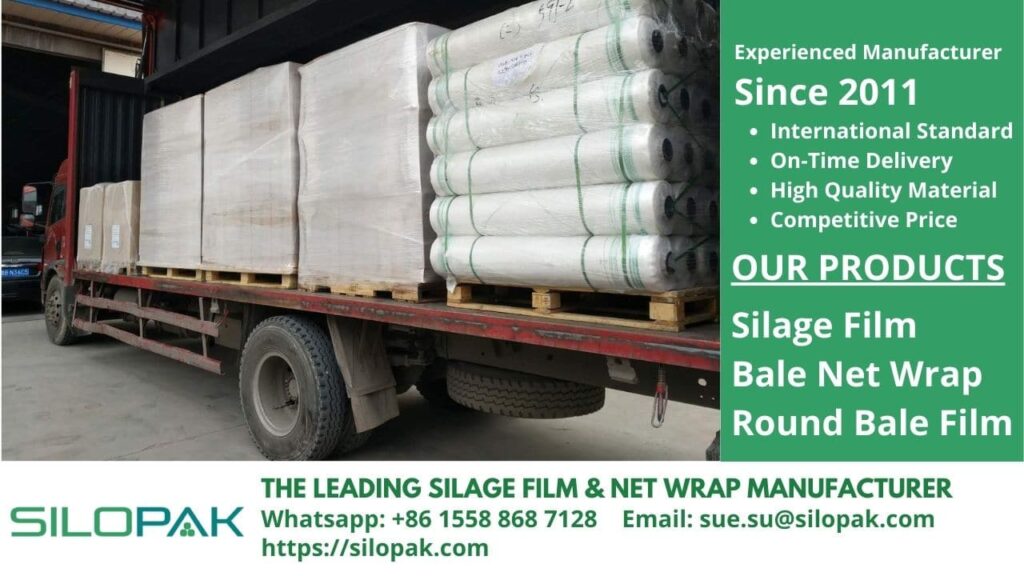
You can rely on Silopak film to protect both greenhouse plants and stored fodder from adverse conditions. We have produced high UV polyethylene film since 2011 for customers across many countries, using selected premium virgin resin tested for 18 months of service life. Harsh weather and daily UV exposure will not compromise the plants in your greenhouse or the feed in your bales when the right film is in place.
Frequently Asked Questions about High UV Polyethylene Film
Q: How long does high UV polyethylene film last outdoors?
A quality high UV polyethylene film made from virgin resin with proper UV stabilizers can last well over a year of continuous outdoor exposure, with Silopak film tested for 18 months of service. Low-grade film without adequate UV stabilization often fails within one to two months, becoming brittle and cracking. The difference comes down to the quality of the resin and the UV additives, which is why it is worth confirming the UV rating or guarantee before buying rather than choosing on price alone.
Q: Does transparent film provide UV protection?
Not on its own. Transparency and UV protection are separate properties. Plain transparent film offers little defense against UV radiation. Effective UV protection comes from UV absorbers and stabilizers engineered into the film during manufacturing. A film can be somewhat translucent and still provide strong UV protection if it contains the right additives, so never assume a clear film is UV-resistant. Always check for a stated UV rating or guarantee.
Q: Can the same UV film be used for both a greenhouse and for wrapping feed?
The underlying material and UV protection principles are similar, but the specific film should match the application. Greenhouse film is designed to control light transmission for plant growth, while silage and bale film is designed primarily as an oxygen barrier and protective wrap for feed. Both benefit from virgin LLDPE with UV stabilizers. A manufacturer such as Silopak produces UV-stabilized film for both purposes, so it is best to specify your intended use so the correct product is supplied.
Q: Why does UV radiation damage plants in a greenhouse?
Excessive ultraviolet radiation can harm plant tissue and, at the cellular level, damage plant DNA. This can affect growth, coloring, and the plant’s ability to propagate healthy offspring with the same characteristics. A greenhouse covered with high UV polyethylene film reduces the amount of harmful radiation reaching the plants, supporting better color, healthier growth, and reliable propagation, while also discouraging UV-dependent pests such as aphids.
Reviewed and updated by the Silopak Editorial Team on 10 July 2026 to keep the guidance on UV film selection accurate for both greenhouse growers and livestock farmers.