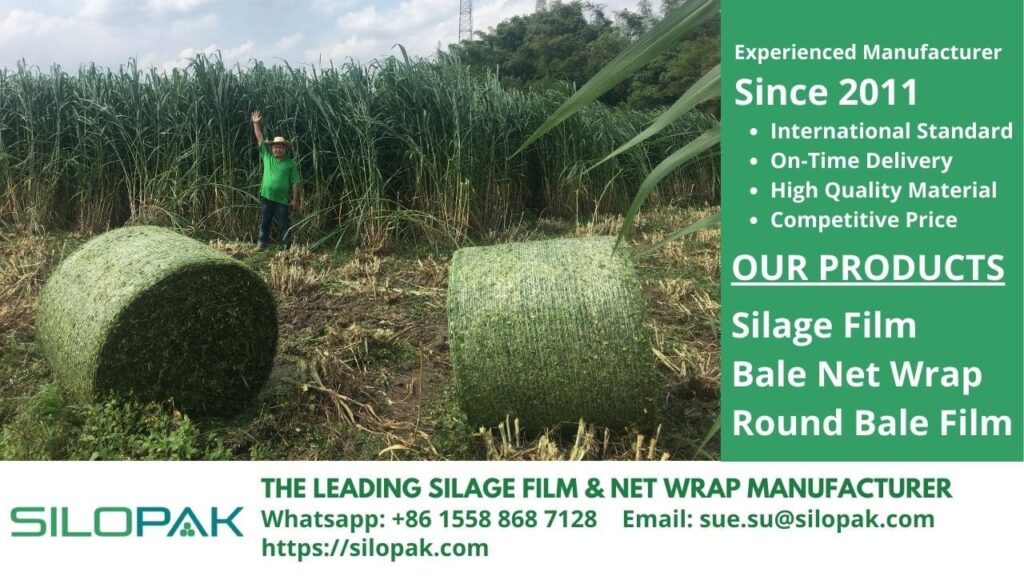
Some people certainly already know what polyethylene plastic is, but not everyone is familiar with its different types and uses. In general, polyethylene is one of the most widely used plastics in the world. It consists of several types, and one of the most important for agricultural and industrial use is high-density polyethylene.
Polyethylene, also called PE plastic, is a thermoplastic used across countless industries. It is commonly found in everyday packaging, but it is also used to manufacture equipment for agriculture and livestock farming. If you are not yet familiar with polyethylene and its types, the following explanation will help.
contents
The General Definition of Polyethylene
Polyethylene, or PE for short, is a thermoplastic widely used in consumer and industrial products. In chemistry, polyethylene is a type of polymer composed of a long chain of ethylene monomers (IUPAC name: ethene). In the industry, polyethylene is commonly referred to as PE, alongside other familiar polymers such as polystyrene (PS) and polypropylene (PP).
Polyethylene was first synthesized by German chemist Hans von Pechmann in 1898, when he accidentally produced it while heating diazomethane. His colleagues Eugen Bamberger and Friedrich Tschirner examined the white, waxy substance and found it contained long chains of -CH2- units, which they named polymethylene. The material that would later be developed into modern polyethylene had been discovered.
Polyethylene plastic comes in several types, each differing in density, molecular weight, and degree of molecular branching. These structural differences produce plastics with very different physical properties and applications. One of the most widely used types in agriculture is high-density polyethylene.
Types of Polyethylene and Their Classifications
In the market, polyethylene is classified by density and molecular weight into several distinct grades. Understanding these differences helps buyers and manufacturers choose the right material for the right application.
| Type | Abbreviation | Density | Key Characteristics | Common Uses |
|---|---|---|---|---|
| High-Density Polyethylene | HDPE | 0.941 g/cm3 and above | Rigid, high tensile strength, heat resistant | Pipes, bottles, bale net wrap, containers |
| Medium-Density Polyethylene | MDPE | 0.926 to 0.940 g/cm3 | Good impact resistance, flexible | Gas pipes, fittings, film |
| Low-Density Polyethylene | LDPE | 0.910 to 0.925 g/cm3 | Soft, flexible, good clarity | Shopping bags, squeeze bottles, film |
| Linear Low-Density Polyethylene | LLDPE | 0.915 to 0.925 g/cm3 | High puncture resistance, stretchable | Silage film, stretch wrap, packaging |
| Ultra-High Molecular Weight PE | UHMWPE | 0.930 to 0.935 g/cm3 | Extremely tough, wear resistant | Medical implants, bulletproof materials |
| Cross-Linked Polyethylene | XLPE | Varies | High chemical and heat resistance | Cables, pipes, foam insulation |
Among the most widely used in everyday and agricultural applications are HDPE, LDPE, and LLDPE. Each has distinct strengths suited to different roles.
High-Density Polyethylene (HDPE)
Of the many types of polyethylene, high-density polyethylene or HDPE is one of the most widely recognized. HDPE is characterized by a density of 0.941 g/cm3 or above and is made from petroleum through a polymerization process.
Compared to other polyethylene types, HDPE has a lower degree of branching in its molecular chain. This results in tighter packing between polymer chains, which gives HDPE its distinctive strength properties: high tensile strength, high intermolecular forces, and a relatively rigid texture compared to LDPE or LLDPE.
HDPE can be produced using a chromium/silica catalyst, a Ziegler-Natta catalyst, or a metallocene catalyst. The choice of catalyst and reaction conditions directly affects the degree of branching in the final material, and therefore its density, strength, and rigidity.
One of HDPE’s most important properties for outdoor agricultural use is its ability to withstand temperatures of up to approximately 120°C without deforming. This makes it well suited for use in environments where temperature fluctuations are common.
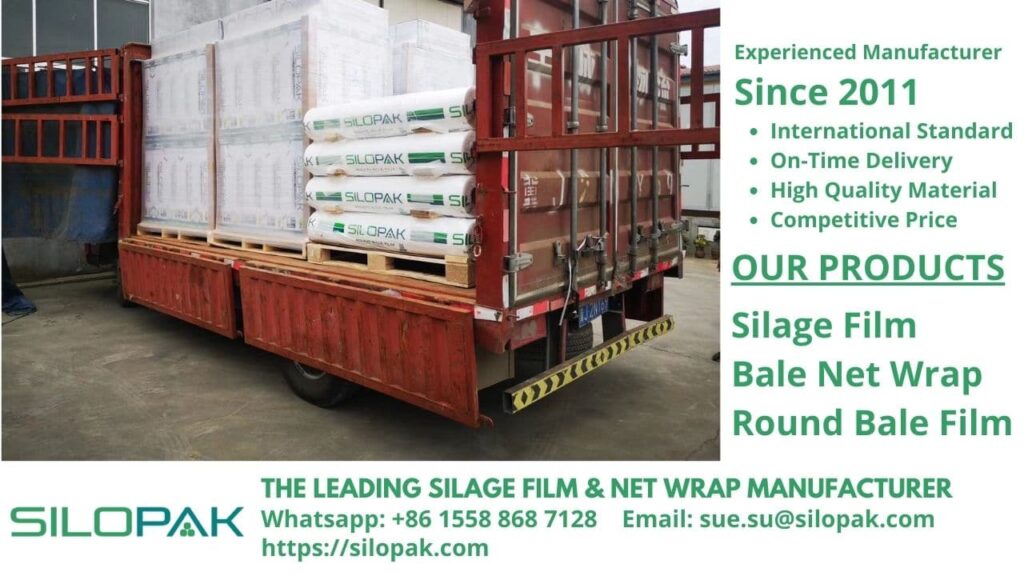
HDPE Plastic Uses in Agriculture and Everyday Life
In everyday life, HDPE plastic is used across a wide range of applications: hot food and beverage containers, grocery bags, fruit and vegetable packaging, and as a coating for warm food containers. Its food-safe properties and resistance to heat and chemicals make it a reliable choice for these applications.
For large-scale agricultural use, HDPE is a key material in bale net wrap production. Farmers use high-density polyethylene net wrap to bind round hay bales tightly after baling, protecting the feed structure during outdoor storage and transport. Because HDPE can withstand outdoor temperature changes without losing structural integrity, bales wrapped with HDPE net wrap can be stored in the field without deteriorating quickly.
HDPE is also used in the production of water tanks, irrigation pipes, and storage containers on farms, making it one of the most versatile materials in the agricultural supply chain.
While HDPE is the preferred material for bale net wrap, it is worth noting that silage stretch film uses a different material: LLDPE silage film is specifically formulated for the airtight, stretchable wrapping required in silage fermentation. Each material is suited to its specific job, and using the right one matters for feed quality outcomes.
To get HDPE net wrap products for your farm, working directly with a manufacturer or OEM supplier is the most practical approach. Bulk orders typically come with better unit pricing and the ability to customize specifications such as roll width and length to match your baler requirements.
Choose Silopak as your OEM factory for high-density polyethylene bale net wrap. Our products are produced to consistent quality standards and have been exported to customers across multiple countries. Contact our team to discuss your requirements and place your bulk order.
Frequently Asked Questions about High-Density Polyethylene
Q: What makes HDPE different from LDPE and LLDPE?
The main difference lies in the degree of molecular branching and density. HDPE has minimal branching, which allows its polymer chains to pack tightly together. This gives HDPE a higher density, greater rigidity, and higher tensile strength compared to LDPE and LLDPE. LDPE has more branching and is softer and more flexible, making it suitable for squeeze bottles and thin film. LLDPE has a linear structure with short side branches, giving it high puncture resistance and excellent stretch properties, which is why it is the material of choice for silage stretch film. Each type is optimized for different performance requirements.
Q: Why is HDPE used for bale net wrap instead of other plastics?
HDPE is chosen for bale net wrap primarily because of its high tensile strength, UV resistance, and ability to hold its structural integrity under outdoor conditions. Bale net wrap needs to withstand the mechanical tension of the baling process, outdoor storage across different seasons, and physical handling by tractor forks and equipment. HDPE provides all of these properties at a cost-effective level. Its resistance to temperatures up to 120°C also ensures the wrap does not degrade or become brittle during hot summer storage conditions.
Q: Is HDPE safe for contact with animal feed?
Yes, HDPE produced from pure, food-grade raw materials is considered safe for contact with animal feed. It is chemically inert under normal storage conditions and does not leach harmful compounds into the feed it contains or covers. This is one of the reasons it is widely used in food packaging and agricultural applications. The key is ensuring the HDPE product you purchase is made from pure, uncontaminated raw material, not from recycled or mixed plastic waste, which could introduce contaminants.
Q: What is the heat resistance of HDPE compared to other plastics?
HDPE can withstand temperatures of approximately 120°C before it begins to deform. This is significantly higher than LDPE, which softens at around 70 to 80°C, and LLDPE, which has a similar melting range to LDPE. For outdoor agricultural applications where bales may be exposed to intense heat from direct sunlight, HDPE’s higher heat resistance is a meaningful advantage. It also means HDPE containers and pipes can be used for hot water applications that would warp or fail with lower-density polyethylene materials.
Q: Who was the first person to synthesize polyethylene?
Polyethylene was first accidentally synthesized in 1898 by German chemist Hans von Pechmann while he was heating diazomethane. His colleagues Eugen Bamberger and Friedrich Tschirner characterized the white, waxy substance and identified it as a polymer with long -CH2- chains, which they named polymethylene. The commercial development of polyethylene as we know it today came later in the 1930s through further research by ICI (Imperial Chemical Industries) in the United Kingdom.
This article was last reviewed and updated by the Silopak Editorial Team on May 2, 2026. Our team periodically revisits published content to ensure accuracy, relevance, and alignment with current best practices in livestock feed management and silage preservation.