You have come to the right place if what you are looking for is hay bale net wrap. This is a crucial item for any farmer who wants to keep their livestock well-fed and healthy. Animals require nutrients. The best feed provides them with the best nutrient contents. And only by storing the feed in the right kind of manner can the feed remain fresh and suitable for consumption. This is where the right net wrap makes all the difference.
What Is Hay Bale Net Wrap?
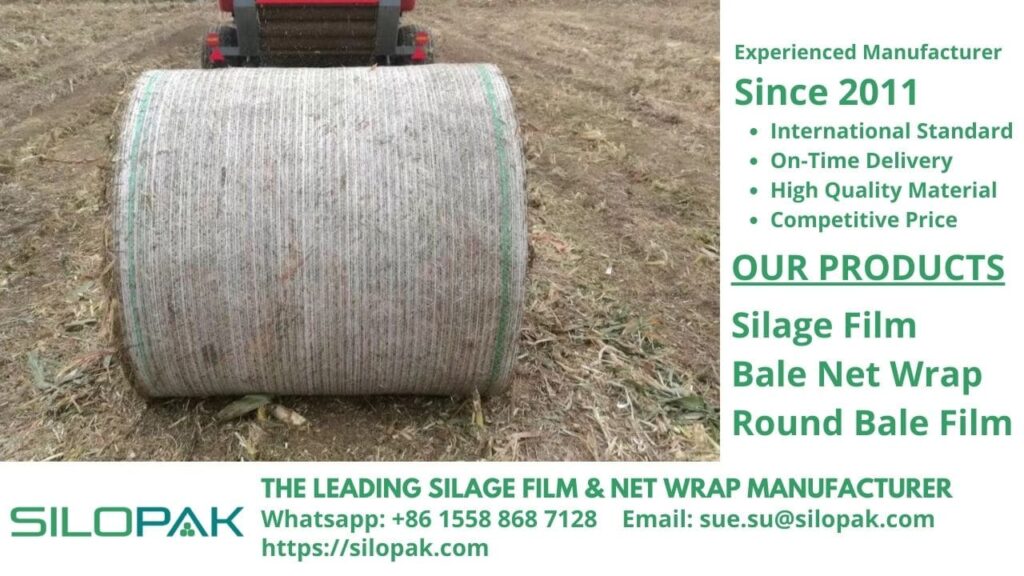
Hay bale net wrap is a strong, mesh-like film made from polyethylene that is wrapped around a round hay bale as it exits the baler. Its primary job is to hold the bale together in a tight, compact shape so it can be stored, transported, and handled without falling apart. Without proper net wrap, a round bale will lose its shape quickly, making storage difficult and increasing feed waste.
Net wrap is different from silage stretch film. Silage film is a solid, airtight barrier designed to create the anaerobic environment needed for silage fermentation. Net wrap, by contrast, is an open mesh that allows some airflow. It is used specifically for dry hay that does not require fermentation but needs physical protection during storage and handling.
What to Consider when Choosing Hay Bale Net Wrap
Not all net wraps are made the same. Being selective is a must-have trait for every farmer to get the most out of their investment. Here is what to look for when choosing the right product.
Versatility
The wrap you choose must be compatible with the baler you are running and the bale sizes you produce. A good net wrap fits a wide range of baler models, whether you run a small farm or a large commercial operation. Before purchasing, confirm the roll width and core diameter are compatible with your specific baler machine.
Pure Material
Net wrap must be produced using pure, food-grade polyethylene without recycled or contaminated materials. If the raw material is impure, there is a risk of chemical contamination transferring to the bale and eventually to the livestock consuming it. Always verify that the net wrap you purchase comes from a manufacturer with a clear and verifiable raw material sourcing process.
Roll Length and Width
Farmers have different baling volumes and bale dimensions. Net wrap rolls come in standard widths, typically 64 inches (163 cm) or 48 inches (122 cm), to match different baler configurations. Roll length determines how many bales you can wrap per roll, which directly affects operational efficiency. Choose a roll length that minimizes mid-field changeovers and suits your daily baling volume.
UV Resistance and Durability
Hay bales are often stored outdoors, exposed to direct sunlight for extended periods. A net wrap without adequate UV stabilizers will become brittle and break down over time, leaving the bale exposed and the feed at risk of spoilage. Choose a product with proven UV resistance that can maintain its structural integrity throughout the full storage period without degrading.
Tensile Strength
A strong net wrap keeps the bale tightly compressed during storage and during loading and transport. Weak or low-grade net wrap can tear under the pressure of handling, especially when bales are moved by tractor forks or stacked. Higher tensile strength means fewer damaged bales and less feed waste over time.
Ease of Handling
Look for net wrap rolls that come with core handles or are designed for easy loading onto the baler. Reducing the time and effort needed to change rolls is a practical advantage, especially during peak baling season when speed and consistency matter.
Net Wrap vs Silage Film: Key Differences
Many farmers use both products depending on whether they are making dry hay or fermented silage. Understanding the difference helps you choose the right wrapping for each situation.
| Feature | Hay Bale Net Wrap | Silage Stretch Film |
|---|---|---|
| Material | Polyethylene mesh (open) | LLDPE solid film (airtight) |
| Airflow | Allows airflow | Blocks all airflow (anaerobic) |
| Purpose | Holds bale shape, protects structure | Preserves feed through fermentation |
| Best Used For | Dry hay at below 20% moisture | Wet forage at 50 to 70% moisture |
| Storage Duration | 6 to 12 months (dry conditions) | 12 to 18 months (airtight) |
| UV Protection Needed | Yes | Yes |
The Main Functions of Hay Bale Net Wrap
What is a hay bale net wrap used for? The primary function is to hold the baled plant material in a firm, compact shape as it exits the baler. Without the wrap, round bales would loosen and scatter, making storage and handling difficult. Once wrapped, bales are easy to stack, move, and retrieve when needed for feeding.
Beyond keeping the bale together, net wrap plays an important role in protecting the outer layer of the hay from rain splash, ground moisture, and physical damage during handling. While it is not an airtight seal like silage film, it does reduce the amount of spoilage that occurs on the bale’s outer surface by keeping the structure tight and minimising contact between the hay and wet ground.
To ensure quality livestock feed for your farmed animals, choose the hay bale net wrap provided by Silopak. All products we offer meet strict quality standards. Our net wrap is UV-stabilized, compatible with a wide range of round balers, and produced from pure polyethylene material to keep your feed safe from contamination.
Frequently Asked Questions about Hay Bale Net Wrap
Q: What is the difference between net wrap and twine for hay bales?
Both net wrap and twine are used to bind round hay bales, but they differ significantly in performance. Net wrap covers the entire surface of the bale as it exits the baler, creating a tight, uniform layer that holds the bale shape very effectively. Twine, on the other hand, binds the bale with a series of parallel strings, which is less effective at maintaining bale density and shape over time. Net wrap is generally faster to apply, produces denser bales, and results in less dry matter loss during storage compared to twine. Most modern commercial operations prefer net wrap for these reasons.
Q: How many layers of net wrap does a hay bale need?
Most standard baling operations apply one to two layers of net wrap per bale. This is sufficient to hold the bale shape securely during storage and transport under normal conditions. Some farmers choose to add an extra layer when bales will be stacked or transported over long distances to reduce the risk of tears or structural failure. The key is ensuring the wrap is applied under consistent tension so the bale is uniformly compact from end to end.
Q: Can net wrap be used for silage bales?
Net wrap alone is not suitable for silage. Silage requires a completely airtight environment for anaerobic fermentation to occur. Net wrap is an open mesh and allows air to pass through, which would prevent fermentation and cause the forage to spoil. For silage, net wrap is sometimes used as a first layer to hold the bale shape, and then multiple layers of LLDPE silage stretch film are applied on top to create the airtight seal. This combination is common in round bale silage production.
Q: What moisture level should hay be at before baling with net wrap?
Hay should be at or below 20% moisture content before baling for dry hay storage. Ideally, most farmers target between 14% and 18% moisture for round bales wrapped with net wrap. Baling at too high a moisture level will cause the hay to heat up inside the bale, promoting mold growth and significant dry matter loss. A simple hay moisture probe can help you determine the right moment to bale and avoid costly spoilage.
Q: How long does net-wrapped hay last in outdoor storage?
Net-wrapped hay bales stored outdoors typically maintain acceptable feed quality for six to twelve months, depending on weather conditions and storage surface. Bales stored on well-drained ground or on a gravel pad will experience significantly less bottom spoilage compared to bales placed directly on bare soil. UV-stabilized net wrap helps protect the outer surface from sun degradation. For longer storage or in high-rainfall areas, covering bales with a tarp or transitioning to baled silage with stretch film is recommended.
Q: How do I choose the right net wrap width for my baler?
The net wrap width must match the width of your baler’s chamber. Most round balers use either 48-inch (122 cm) or 64-inch (163 cm) net wrap. Check your baler’s user manual or contact the baler manufacturer to confirm the correct specification. Using net wrap that is too narrow will leave the bale ends exposed and poorly bound, while wrap that is too wide may cause feeding issues inside the baler mechanism. At Silopak, we offer net wrap in multiple widths to suit different baler models.
This article was last reviewed and updated by the Silopak Editorial Team on April 28, 2026. Our team periodically revisits published content to ensure accuracy, relevance, and alignment with current best practices in livestock feed management and silage preservation.