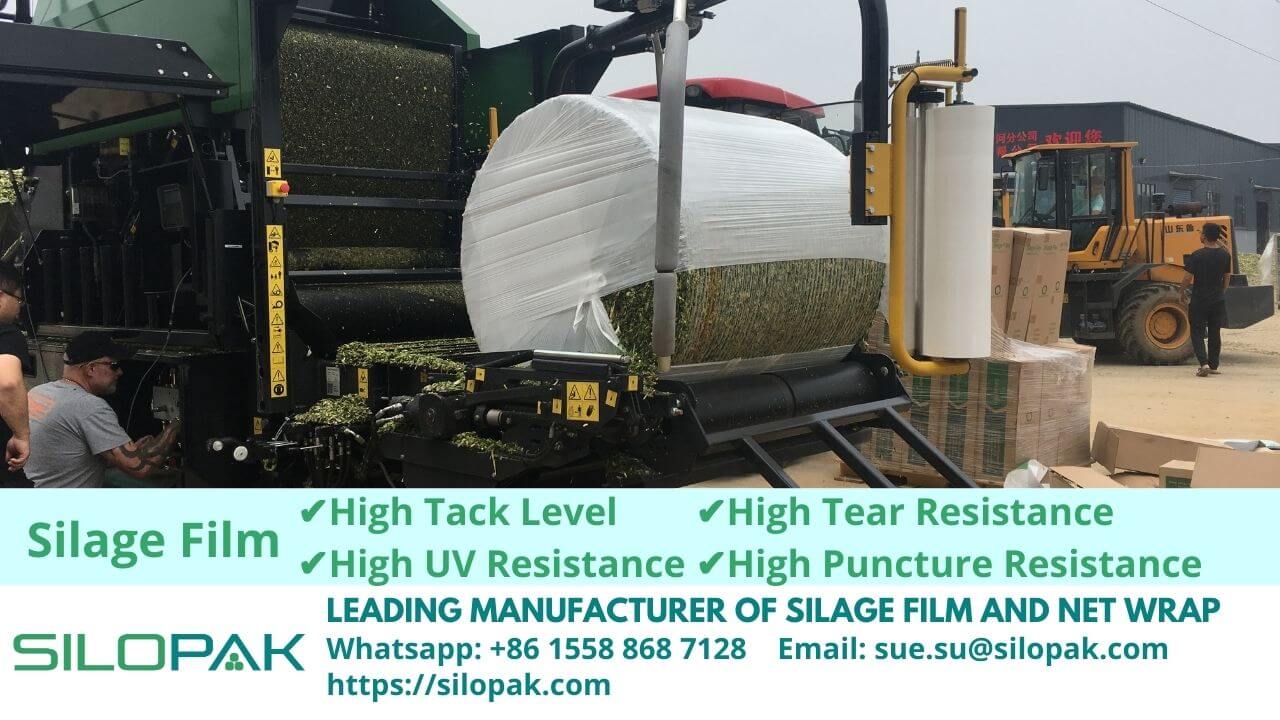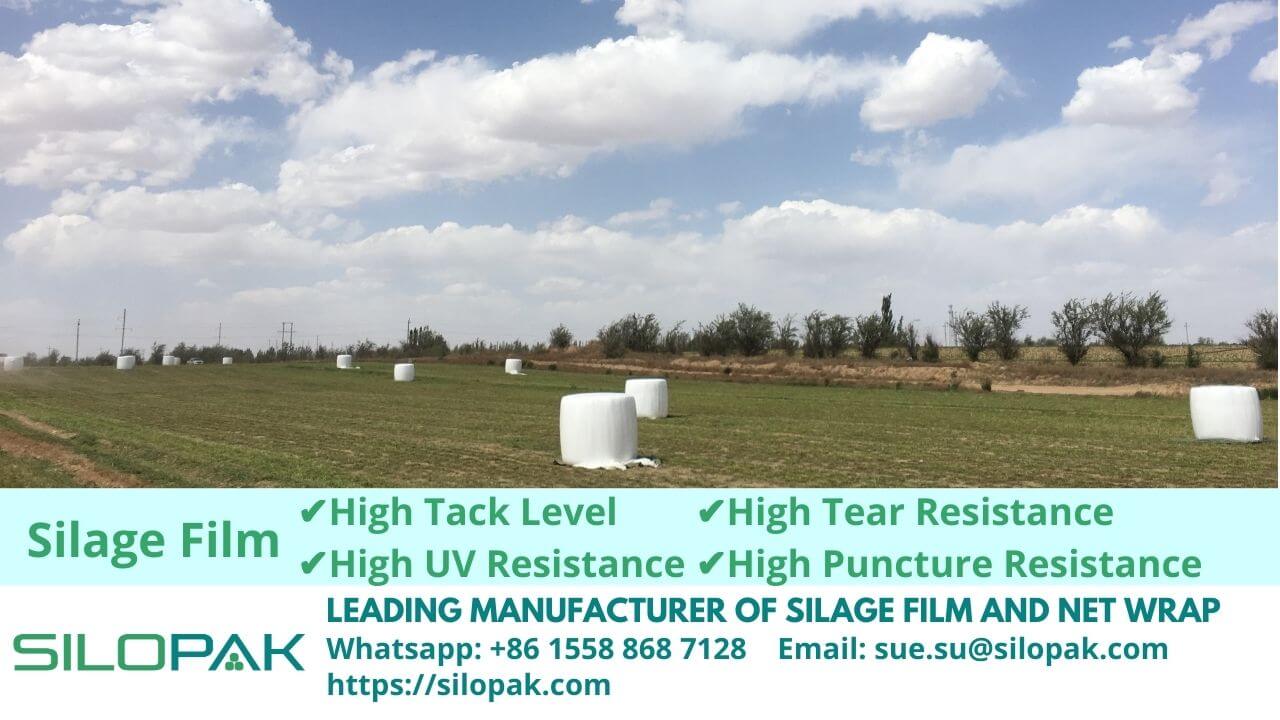
Grass Silage Film Is Now Used Widely in Making High-Quality Silage
Along with several other influencing factors, a good silage film is essential to be considered in silage making. Those factors and the silage film itself should be known in detail.
In a review of analytical grass baleage produced in West Virginia, most of the samples had higher pH values than ideal. To determine why this is the case, a regional agency from West Virginia University Extension evaluated baleage management practices of 39 farmers by working with them.
Factors That Affect Silage Quality
They analyzed the management effect on fermentation quality and forage nutrition. They collected baleage from 162 fields over three years to be analyzed. The figure shows the relation between moisture content and baleage pH. In this study, to explain the effect of management on the pH, they can be divided into four regions.
Moisture Content Levels
The single greatest influence on grass bale pH is moisture content. In one WVU study, the average pH of the baleage in the 50 to 60 % moisture content range was 5.27 — higher than ideal for good fermentation (typical well-fermented grass baleage is closer to pH 4.8–5.2). pH increases when moisture content decreases below 50 %. The TDN (total digestible nutrient) content is higher in less mature forage.
It also had lower pH and better fermentation. Forage that had a subsequent maturity index (neutral detergent fibers) and had a high N fertility index (higher in crude protein) had higher pH. Moreover, several other factors affect the baleage quality.
Heat Damage
There is often overheating on blocks that are poorly fermented, resulting in NDICP (neutral detergent insoluble crude protein). NDICP generation decreases in underripe forages and increases in low moisture forages.
Forages with high CP are more susceptible to heat damage, perhaps because more CP is available for NDICP formation. Therefore, it is imperative to properly manage high CP so that the heat damage in this potentially high-quality straw can be prevented.
Cutting Time
No effect occurred on baleage pH from time of day when moisture content was more than 50 %. However, late afternoon cutting resulted in pH over 6 when the moisture content was below 40 %. This may be due to fermentable carbohydrates that are used for overnight respiration, resulting in poor fermentation.
Baleage pH and Baler Technology
In one WVU study, on average, lower pH baleage resulted from variable-size bale chambers with newer silage-type balers. The variable chamber baler produced bales about 0.23 pH units lower on average than comparable moisture-adjusted averages. In contrast, fixed-chamber balers averaged up to 0.64 pH units higher than the moisture-adjusted pH averages of all balers.
However, when the model was used on different farms, even hard-core balers had their pH adjusted for moisture, varying from 0.34 pH units lower to 0.65 pH units higher than average. This pH variation was observed between baler types in the same study.
What does this mean? It is not just about the baler build and model, but the management itself is the important thing to make a high-quality baleage. Farmers should know how to use and adjust the balers they have so that they can get the best quality baleage.
Moisture Meter
The windrow moisture content can be measured by using a moisture meter. The range of moisture needed to make a baleage can be measured by this meter. The water levels measured in the laboratory versus in the field had some bias.
When the moisture content was less than 50 %, it would be estimated and underestimated by the meter when more than 50 %. The most accurate moisture meter was at 50 %; in this, the laboratory reading matched 66 % of the time.
Make High-Quality Silage Baleage by Using Grass Silage Film
Farmers can produce stored forage cost-effectively by using baleage. Instead of making haylage from dry hay, producers can make haylage with a lower risk of rain damage and storage losses by using plastic film.
Plastic film reduces losses but does not guarantee preservation at every moisture content; bales still need to be made at the recommended moisture range for good fermentation.
Here is the instruction for using the plastic film for grass silage:
-
Don’t overstretch the pasture film when using it.
-
When you wrap the silage, the previous film layer should be covered at least 50 % by the next layer and wrap it tightly. After wrapping, secure and tuck the film tail firmly into the wrapped layers to ensure a seal.
-
It is recommended to wrap at least 4–6 layers, or follow the manufacturer’s recommendation.
-
If the wrapped surface of the silage bales is completely damaged, it is recommended that they be repaired immediately with suitable adhesive tape.
-
Don’t roll the silage bales on the ground.
-
Keep the silage bags away from livestock, plants, toxic or dangerous chemicals, and check frequently for bites by rodents such as rats. Cover or repair the silage bags immediately with suitable tape if punctured.
-
When putting the pasture film on the machine, check whether the lower and upper ends are damaged or not. Small cross-section damage can cause film failure during use.
-
Store the unused grass silage film in a dark and cool environment, and pay attention to mechanical damage and moisture resistance of the film surface.
Instead of using preservatives, using plastic film over a curing agent gives the main advantage of preserving bales within the proper moisture range. Get the best grass silage film from Silopak manufacturer to help keep your forage nutrition and quality.