If you are looking for a feed strategy that improves both livestock productivity and soil health at the same time, cowpea intercropping deserves serious attention. Growing cowpea alongside cereal crops such as maize, sorghum, or millet is one of the most practical and economical approaches for farms that want to maximize land use while producing high-quality cowpea fodder for cattle and other livestock.
This is not a new concept. Farmers across sub-Saharan Africa, parts of Asia, and Australia have practiced cowpea intercropping for decades. What makes it increasingly relevant today is the combination of rising feed costs, pressure on land use, and the need for sustainable soil management. Cowpea delivers on all three fronts simultaneously.
Why Cowpea Works Well as an Intercrop for Livestock Feed
Cowpea is an annual legume with a deep taproot system that can fix atmospheric nitrogen into the soil through its root nodules. When intercropped with nitrogen-hungry cereal crops like maize or sorghum, cowpea effectively fertilizes the companion crop while producing its own high-protein forage at the same time.
The crude protein content of cowpea forage varies by plant part and harvest stage. Leaves and young shoots typically contain over 20% crude protein, while stems and haulms range from 8 to 18% depending on maturity. As a combined system, cowpea intercropped with maize or sorghum produces a fodder blend that naturally balances protein from the legume with energy-dense starch from the cereal. This combination closely mirrors the nutritional requirements of ruminant livestock without requiring expensive external supplementation.
Many breeders who apply this system report measurable improvements in cattle weight gain, milk production in dairy cows, and overall feed efficiency. The economic benefit is compounded by the fact that both components of the intercrop can be harvested together and ensiled as mixed silage, preserving their combined nutritional value for use in dry seasons.
How Cowpea Intercropping Works in Practice
The most widely practiced system uses two rows of maize for every one row of cowpea, planted at the same time or with cowpea sown seven to ten days after the maize to prevent the legume from shading out the cereal during early growth. Spacing is typically 80 cm between rows with 40 cm between plants within each row.
For forage-focused intercropping rather than grain production, the whole plant mixture can be harvested at the pod-filling stage of the cowpea, which is when the combined system reaches its peak balance of protein, moisture, and digestible energy. At this stage, the material is ideal for making mixed silage through anaerobic fermentation.
Cowpea can also be intercropped with sorghum or pearl millet in drier conditions where maize yield is less reliable. Sorghum offers similar intercrop benefits and is itself an excellent silage base crop, giving the system added resilience in low-rainfall environments.
Cowpea Intercropping System Comparison
| Intercrop Combination | Best Suited Environment | Forage Protein Contribution | Energy Contribution | Best Use |
|---|---|---|---|---|
| Cowpea + Maize | Moderate to high rainfall, 600 mm+ | High (cowpea leaves 20%+ CP) | High (maize starch) | Mixed silage, feedlot finishing |
| Cowpea + Sorghum | Semi-arid, 400 to 600 mm rainfall | High | Moderate to High | Drought-season silage, beef cattle |
| Cowpea + Pearl Millet | Arid zones, sandy soils | High | Moderate | Smallholder fodder, goats and sheep |
| Cowpea Monoculture | Any suitable soil, all rainfall zones | Very High | Low (requires cereal supplement) | Hay, protein supplement, cover crop |
Nitrogen Fixation and Soil Benefits
One of the most underappreciated aspects of cowpea intercropping is what happens to the soil after harvest. Cowpea root nodules can fix up to 80% of the plant’s nitrogen needs from the atmosphere, and when crop residues are incorporated back into the soil, the nitrogen becomes available to subsequent crops. Research has shown that cowpea can contribute between 40 and 240 kg of nitrogen per hectare depending on variety, inoculation, and growing conditions.
For farms running a crop rotation system, planting cowpea in one season meaningfully reduces the fertilizer requirement for the next cereal crop. This makes the intercropping system not just a feeding strategy, but a long-term soil management investment. Fattening cattle and improving your land at the same time is exactly what makes cowpea intercropping attractive to progressive breeders.
Making Silage from Cowpea Intercrop Fodder
One challenge with making pure cowpea silage is that cowpea, as a legume, is naturally low in water-soluble carbohydrates. This can slow lactic acid bacteria activity and result in unstable fermentation. Intercropping with a cereal crop solves this directly. When cowpea and maize or sorghum are harvested together and ensiled as a mixed crop, the cereal provides the readily fermentable sugars that legume-only silage lacks.
The combined silage produced from cowpea and maize intercropping consistently achieves stable pH levels and high nutritional density, with studies reporting crude protein levels of 14 to 18% in the combined silage depending on the ratio of legume to cereal in the mix. This positions mixed cowpea-cereal silage as a cost-effective alternative to expensive protein supplements in ruminant rations.
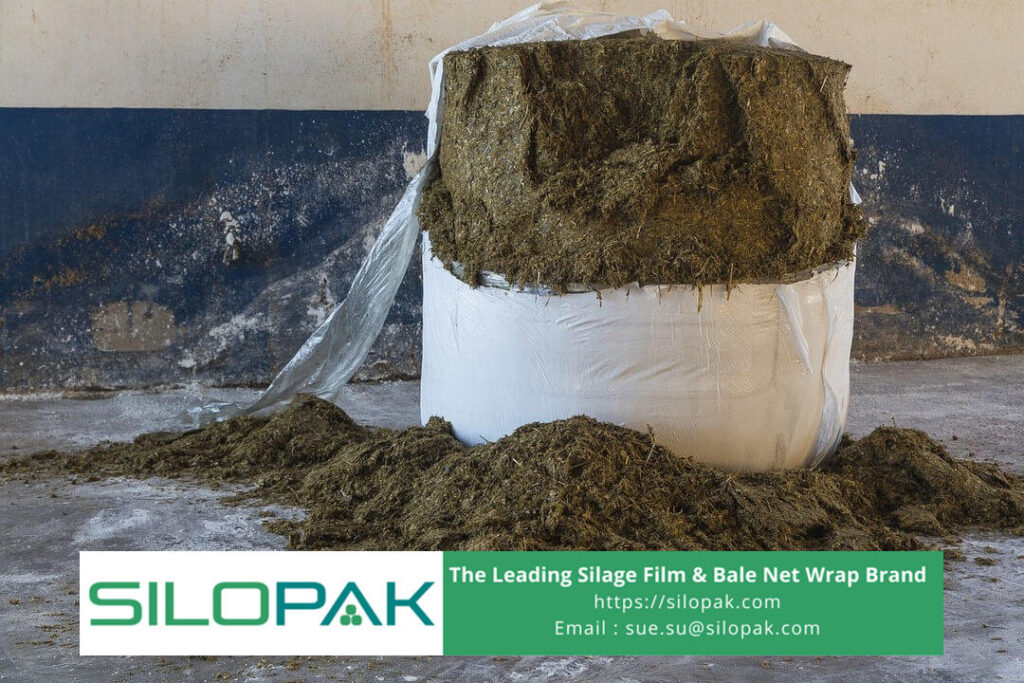
To preserve the nutritional quality of this mixed fodder through long storage periods, wrapping the bales in quality silage film is essential. An airtight seal maintains the anaerobic environment needed for successful fermentation and prevents dry matter losses caused by oxygen exposure. For the full nutritional profile of cowpea as a feed ingredient, see our detailed guide on the nutritional value of cowpea fodder.
Planting Tips for Cowpea Intercropping
Getting the intercropping system right from the start saves time and avoids common mistakes that reduce both forage yield and soil benefits.
- Inoculate cowpea seed with the correct rhizobium strain before planting. Without inoculation, nitrogen fixation may be limited, reducing both the soil benefit and the protein yield of the cowpea forage.
- Delay cowpea sowing by seven to ten days after the cereal to prevent the legume from establishing too aggressively and competing with the companion crop for light in the early growth phase.
- Use vine-type or semi-erect cowpea varieties for forage systems. These produce higher leaf biomass and are better suited for silage than compact shrub-type varieties bred primarily for grain.
- Set the row ratio at two cereal rows to one cowpea row as the standard starting point. This ratio can be adjusted based on your primary goal: a higher legume ratio increases protein but may reduce total energy yield from the cereal component.
- Monitor for aphids and pod borers during flowering. Cowpea is particularly vulnerable to Aphis craccivora and Maruca vitrata, which can significantly reduce yield if left uncontrolled.
- Harvest the whole crop at the cowpea pod-filling stage for maximum silage quality. Waiting too long increases fiber content and reduces digestibility.
Frequently Asked Questions about Cowpea Intercropping for Cattle Feed
Q: What is the best intercrop combination with cowpea for cattle silage?
The most widely recommended combination is cowpea with maize, planted at a ratio of two maize rows to one cowpea row. Maize contributes high starch energy and readily fermentable sugars that improve silage fermentation quality, while cowpea contributes protein and nitrogen. Together the mixed silage typically achieves crude protein levels of 14 to 18%, making it nutritionally complete for beef cattle and dairy cows without the need for expensive purchased protein supplements. In drier areas, cowpea with sorghum is an equally effective combination with better drought resilience.
Q: Does cowpea intercropping reduce fertilizer costs?
Yes, significantly. Cowpea forms a symbiotic relationship with rhizobium bacteria in soil, fixing atmospheric nitrogen into a plant-available form through root nodules. After harvest, when cowpea residues and roots decompose, this fixed nitrogen releases into the soil, enriching it for the following crop. Research estimates that cowpea can contribute between 40 and 240 kg of nitrogen per hectare depending on conditions and inoculation. For a farm running maize in the following season, this can translate into a meaningful reduction in nitrogen fertilizer application, lowering input costs while maintaining or improving yield.
Q: Can cowpea intercrop forage be fed fresh or does it need to be preserved?
Cowpea intercrop forage can be fed fresh as cut-and-carry fodder, grazed directly, or preserved as hay or silage. Fresh feeding is practical when the crop is nearby and livestock numbers are manageable. However, grazing cowpea directly should be managed carefully to avoid bloat, particularly when cattle enter a young, lush sward on an empty stomach. For larger operations or where the harvest volume exceeds immediate feeding needs, preserving the forage as mixed silage is the most practical approach. Silage allows the nutritional value of the peak-harvest crop to be maintained and used months later during dry-season feed shortages.
Q: How much protein can cattle get from cowpea intercrop silage?
Mixed cowpea-cereal intercrop silage typically delivers crude protein levels of 14 to 18% on a dry matter basis, depending on the legume-to-cereal ratio at harvest. This is significantly higher than maize silage alone, which averages around 7 to 9% crude protein, and is comparable to the protein content of many commercial protein meal supplements. For beef cattle in a finishing phase or dairy cows in early lactation, this protein level is nutritionally meaningful and can reduce or eliminate the need for additional purchased protein supplementation in the ration.
Q: How should cowpea intercrop silage be stored to maintain quality?
The mixed cowpea-cereal forage should be harvested at the correct moisture level, typically between 60 and 70% moisture, then baled and wrapped immediately with multiple layers of high-quality LLDPE silage stretch film to create an airtight seal. Bales should be stored away from sharp objects, direct sunlight where possible, and inspected regularly for any punctures or film damage. An intact airtight wrap maintains the anaerobic fermentation environment that preserves the silage and prevents spoilage. Under proper storage conditions, well-wrapped mixed silage can maintain its nutritional quality for 12 to 18 months.
This article was last reviewed and updated by the Silopak Editorial Team on May 14, 2026. Our team periodically revisits published content to ensure accuracy, relevance, and alignment with current best practices in livestock feed management and silage preservation.