In a husbandry, feedstock is very important. With silage spoilage prevention, the farmers can manage to provide enough supply. Damage in the feed can cause a big problem. Here is an interesting insight into avoiding the damage from happening.
Increase in the Challenge
A year-round supply with enough feedstock is a blessing. However, some obstacles hinder this good plan and make everything fail. Furthermore, the recent damage is different from the previous year or even a century ago.
The evolution of bacteria and microorganisms, the climate change are two strong causes. The agriculture practices also change; everything is not the same as in ancient times. Adaptation and update to the new condition is the main solution. There is a modern way to overcome the climate problem and high-moisture crops that often get in the way of successful feeding.
Crop Patterns and Climate Change as a New Challenge
Decades or a century ago, when the technology that modify weather hadn’t been invented, the climate and the air were cleaner. The timeline of the weather was on time. Now, the weather often does not according to the timeline.
Pollution is suspected to be the main cause, especially pollution that comes from substance that erodes the ozone layer. It results in inconsistent humidity levels, unpredictable rainfall, and rising temperatures. In the process and during the storage time, the farmers use a new way to maintain the feed quality. The traditional method is not relatable anymore.
Not just the way, the material also has new alternatives that fit more to the current condition. The traditional crops like corn shift to grasses, legumes and sorghum. Crop rotation and water shortages are behind the transition. However, the transition increases the risk of some damages like feed losses, mold growth and other kinds of spoilage.
New Alternatives with New Obstacles
The alternatives come with their package (as always), the new obstacles. The newcomers are with high moisture. That becomes the key to the obstacles where the high moisture content contributes to the slower fermentation.
This triggers the growth of harmful microbes that later cause heating, aerobic spoilage. This nightmare starts with the poor compaction of the bale. pH drop delay and oxygen infiltration threaten. Knowing all these risks, some serious actions have to be taken.
The Right Sealing Methods and Climate-Resilient Storage
To face extreme weather, in silage spoilage prevention action, a special method has to be applied. The recommended methods that protect the feed from drastic temperature changes. In reducing aerobic damage, weighted sealing systems, multi-layer covers, and oxygen barrier films can be used. Not just protecting from air penetration, the strong seal could protect the feed from animal attack.
To catalyze the whole process, the time management has to be rearranged. The harvesting is done faster, and the material is chopped into the ideal size. With those two speedy processes, the fermentation can be started earlier.
Fermentation is the process that needs more time than the other processes and can only be accelerated with an indirect process (by accelerating the previous process). The baling is done with a modern and up-to-date machine to produce a perfect bale shape. After that, the seal used is high quality one to perfect the whole process and avoid damage in the future.
Tools to Manage the Moisture
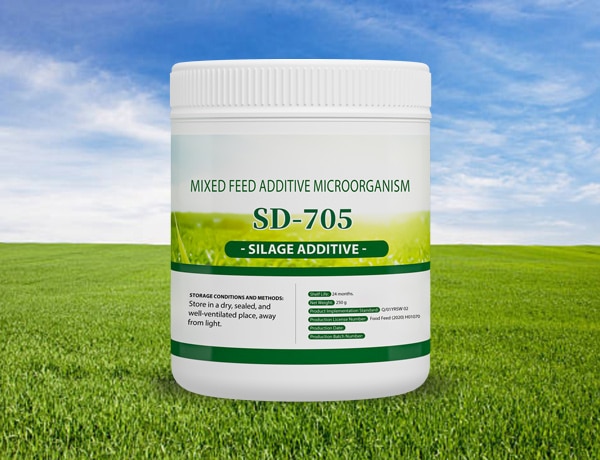
Lactobacillus buchneri – Silage Additive
To level up the fermentation, chemical and biological tools can be used. Microbial inoculants like Lactobacillus buchneri are one of the examples. The agents also help the material fight the damage caused by organisms. In managing the moisture level, biochar, beet pulp, and straw are the agents.
Sometimes, fermentation gets troubled when it is too wet. To overcome this, enzyme-based agents are used to elevate the fermentation quality. However, those substances or agents are categorized as additives, so the usage has to be adjusted according to the main agents or materials, so there will be no complication. Also, pay attention to the moisture level and the feed type.
Adaptation in a Vulnerable Region
Some regions experience more extreme weather and more drastic changes. A region with high rainfall frequency has different silage spoilage prevention methods from those that don’t. Regions with extreme weather, like winter and summer, also need to be considered.
In reducing the loss, airtight storage combined with climate-smart crops is applied. Those are done for the sake of healthier animals that later will result in better production (milk products or meats).
Adaptation is the Key
In recent days, climate and weather conditions are not the same as a century ago. To survive and to make the business run smoothly, adaptation is an important thing to do. Modern machines and methods have been launched to adapt to the new conditions. But this is not the end, further research can be conducted to update and adapt to the newest condition. The farmers also have to be trained to use the latest technology, following the new research. To have enough feed stock, healthy and productive livestock, and to avoid financial loss, silage spoilage prevention is not an option but mandatory.