Silage making is an ancient agricultural practice that dates back more than 3,000 years. However, the rapid growth of the technology driven by silage wrap film manufacturers only occurred after the 1940s. In the temperate regions of Europe and North America, silage making is well established, and in recent decades it has spread widely and become popular across the tropics. As that adoption has grown, the quality of the silage wrap film itself has become one of the most important factors determining whether preserved feed succeeds or fails.
This guide looks at the real silage challenges farmers face in different parts of the world, what makes a silage wrap film reliable, how to choose the right manufacturer, and the specifications that matter when sourcing film for your operation.
Silage Challenges Around the World
Silage is made and stored under very different conditions across regions, and the problems farmers face differ accordingly. Understanding these regional challenges explains why film quality and correct fermentation management matter so much.
South Africa
In South Africa, whole corn (Zea mays) is widely used in silage production because of its high yield, high water-soluble carbohydrate (WSC) concentration, and low buffering capacity. This makes maize silage a key forage fiber source for ruminants. However, its high WSC and lactic acid content also make it prone to spoilage by microorganisms such as yeast. Maintaining strict anaerobic conditions in bunker storage is therefore essential for preserving maize silage effectively, which places a heavy demand on the quality of the covering film.
Brazil
Farmers in Brazil typically preserve maize silage in silo bunkers lined with polyethylene (PE) film. This film covers the forage and creates the anaerobic conditions crucial for preservation. PE film is preferred for its durability, resistance to environmental stress, and cost-effectiveness. Horizontal silos are popular in Brazil for their efficiency and lower construction cost, but they carry a higher risk of air exposure, which can lead to aerobic decay if the film seal is not maintained.
Northern Europe
Although silage inoculants are widely used in Northern Europe, acid-based additives remain a reliable choice for ensuring good fermentation quality, high silage intake, and nutritional value in difficult, cold weather conditions. In cold regions, corn growth and fermentation are limited by the short, cold season, which disrupts the effectiveness of inoculation and natural microorganisms, making a dependable film seal even more important.
Southeast Asia
In the humid tropical regions of many developing countries across Southeast Asia, small farmers are the backbone of ruminant livestock production. They rely heavily on natural forages. In Malaysia, greenery is abundant for most of the year, but during the dry season a shortage of forage causes real problems for ruminant feed supply.
In hot areas, silage crops face several pressures. High temperatures negatively affect maize yields and nutritional value. Alcohol and butyrate fermentation can occur in warm-season grasses such as those in the Pennisetum and Panicum genera and in sugar cane. And high heat accelerates aerobic damage to silage once it is exposed to air. In all of these cases, a UV-resistant, airtight film is the first line of defense.
Why Silage Wrap Film Quality Matters
Efficient silage management is the key to minimizing the loss of dry forage matter. These losses often go unnoticed unless they are accurately measured during the ensiling and removal process, which many farmers neglect. Achieving uniform, high-quality silage across the entire silo profile is crucial, particularly in modern dairy farms aiming for sustainability.
This involves reducing quality loss and dry matter (DM) loss while improving silage safety and microbial quality, especially around the silo edges where air exposure is highest. Advances in ensiling research over recent years have paved the way for more effective silage planning, focused on minimizing DM losses and maximizing nutritional quality. Optimal forage harvesting, with attention to moisture content and maturity, is essential for enhancing palatability, digestibility, and intake.
The film is central to all of this. The plastic film used to wrap silage bales or cover bunker silage must resist bird, hail, and rain damage, and it must be UV resistant to protect the silage through long periods of sun exposure. A film that fails at any of these points compromises the entire crop it was meant to protect.
Manufacturer, Supplier, or Distributor: Know Who You Are Buying From
When sourcing silage wrap film, it helps to understand the supply chain, because where you buy affects both price and quality assurance.
| Role | What They Do | Price Level | Best For |
|---|---|---|---|
| Manufacturer | Produces film from raw resin; controls quality and specification | Lowest (factory direct) | Bulk buyers, distributors, OEM orders |
| Supplier | Sources and sells film; may or may not manufacture | Medium | Medium-volume buyers needing consultation |
| Distributor | Buys from manufacturer, stocks and resells regionally | Higher (added margin) | Small, urgent, local purchases |
Buying directly from a manufacturer removes the intermediary margin and gives you control over specification and quality verification. This matters most for buyers purchasing in volume or reselling film in their own markets.
How to Choose a Silage Wrap Film Manufacturer
Price alone is a poor guide. Film is produced across the full quality spectrum, from premium virgin-material film to cheap recycled-blend products that fail before the storage season ends. The criteria below separate a dependable manufacturer from a risky one.
1. Virgin LLDPE Material
Quality silage film is made from virgin LLDPE (linear low-density polyethylene), the most flexible polyethylene grade and the ideal base for stretch film. Recycled or blended material introduces inconsistencies in stretch, puncture resistance, and UV stability that are invisible on the roll but cause failure in the field.
2. Verified UV Resistance
Because bales sit outdoors for months, UV stability is critical. A reliable manufacturer guarantees UV resistance for a defined period rather than making vague claims.
3. Multi-Layer Construction
Modern silage film combines the oxygen barrier, stretch, puncture resistance, and UV protection through multi-layer construction. Match the construction to your storage duration and climate.
4. Correct Color for the Job
Color is functional, not decorative. White film reflects heat and keeps internal bale temperature stable, which is why it is preferred for agriculture. Transparent film offers no UV protection and suits only short-term or indoor uses.
5. Guaranteed Length and Specification
A trustworthy manufacturer guarantees the stated roll length, width, and thickness, so you can plan coverage and avoid shortfalls during the baling window.
“Farmers in a wet tropical climate and farmers in cold Northern Europe are solving completely different silage problems, but they share one requirement: a film that actually holds its seal for the full storage period. We have shipped to both kinds of market since 2011, and the lesson is always the same. The film is a small fraction of the value of the crop it protects, so the right film is the one proven to perform in your specific conditions, not simply the cheapest roll on offer.”
— Sue Su, Marketing Director of Silopak
Silopak Silage Wrap Film Specifications
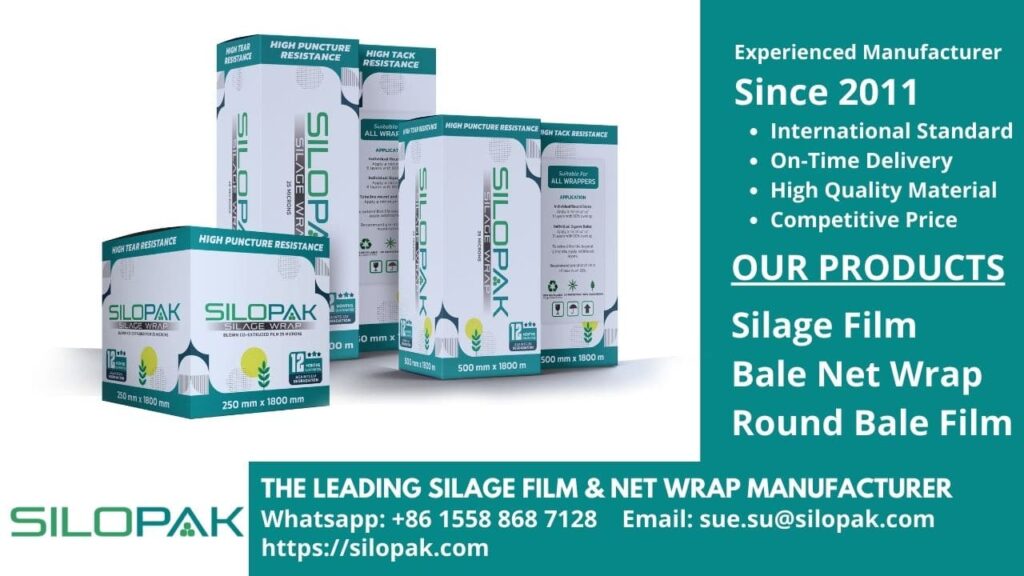
Silopak is an experienced silage wrap film manufacturer based in Qingdao, China, exporting to markets including Australia, New Zealand, Korea, Mexico, Greece, and many others since 2011. Our LLDPE silage film is produced from premium virgin resin. The standard specifications are below.
| Specification | Detail |
|---|---|
| Material | Virgin LLDPE (linear low-density polyethylene) |
| Sizes (width x length) | 750mm x 1500m / 500mm x 1800m / 250mm x 1800m |
| Thickness | 25 microns |
| Color | White (heat reflective, UV protective) |
| UV guarantee | 12 months against UV degradation |
| Usable storage life | 18 months or more when the seal stays intact |
| Key properties | High tear and puncture resistance, all-weather durability |
| OEM / ODM | Accepted for qualifying orders |
Switching to Quality Silage Film Production
The goal of feed conservation is to ensure feed is available during times of scarcity. Overcoming silage production challenges in extreme temperatures is central to that goal. Effective strategies include packing forage into silos at the right density and rate, using silage additives to reduce spoilage, choosing suitable plastic covers, and optimizing daily feed-out methods to minimize waste.
The one-stop solution to problems such as microbial spoilage and variable weather conditions is to use high-quality plastic wrap. You can get reliable bale net wrap and silage film from Silopak, an experienced silage wrap film manufacturer in China that buyers worldwide rely on. For buyers who need bulk volume or their own branding, we also accept OEM and ODM orders. For an external reference on the science of silage preservation, the Food and Agriculture Organization (FAO) provides useful background on conservation principles.
Frequently Asked Questions about Silage Wrap Film Manufacturers
Q: What material is the best silage wrap film made from?
The best silage wrap film is made from virgin LLDPE (linear low-density polyethylene). LLDPE offers the combination of flexibility, stretch, and puncture resistance that stretch film requires. Films made from recycled or blended material may look identical on the roll but perform inconsistently, with weaker stretch, lower puncture resistance, and shorter UV life. When evaluating a manufacturer, always confirm the film is produced from virgin LLDPE rather than recycled content.
Q: How long does silage wrap film preserve feed?
When applied correctly with sufficient layers and an intact airtight seal, quality silage wrap film preserves feed for 18 months or more. Silopak film carries a 12-month guarantee specifically against UV degradation, with usable life extending well beyond that when the seal stays undamaged. The decisive factor is maintaining the anaerobic environment: any puncture or tear that lets oxygen in will start spoilage regardless of film quality, so bales should be inspected regularly and any damage repaired promptly.
Q: Why is silage film white instead of clear or black?
Color in silage film is functional. White film reflects sunlight and heat, keeping the internal bale temperature stable, which protects the silage during outdoor storage. Transparent film offers no UV protection and is suited only to short-term or indoor use. Black film absorbs heat and is generally used in industrial rather than feed applications. For outdoor silage that needs UV protection, white film is the correct choice.
Q: Can I order silage wrap film with custom sizes or my own brand?
Yes. Manufacturers with OEM and ODM capability, such as Silopak, can produce film in custom widths, lengths, and thicknesses, and can apply private-label branding for qualifying order volumes. This is particularly useful for distributors and resellers building their own product line, and for large farms with specific size needs. Custom widths also remove the need to cut film to size on-farm. Contact the manufacturer directly to discuss minimum order quantities and lead times.
Q: Is silage wrap film from China reliable?
Chinese manufacturers produce silage film across the full quality range, so the answer depends entirely on the specific manufacturer and product. The key is to verify what you are buying: insist on virgin LLDPE material, a defined UV guarantee, and guaranteed roll length and thickness. A manufacturer with a long export record to demanding markets such as Australia and New Zealand, as Silopak has held since 2011, demonstrates that its film meets the expectations of quality-conscious international buyers.
This guide was reviewed and updated by the Silopak Editorial Team on 24 June 2026 to reflect current silage film specifications and regional silage management practices. We revisit it periodically as conservation methods and product standards evolve.