Lactobacillus buchneri – Silage Additive
Moisture control silage additive gives an important way out of the classic husbandry problem. The water content is always a dilemma that can ruin everything. This solution focuses on water content management to optimize the fermentation process and produce high-quality feed. In sustainable husbandry and agriculture, water content regulation is the main factor that determines the success of the fermentation.
This article will discuss the importance of the right water content and how it affects the feed quality, how to choose the right additional material, and make all the activities more environmentally friendly.
Water Content in the Fermentation Process
Water content affects the fermentation success. Ensilage ideally has 30 to 35% of dry matter. If the water content is too high, the ensilage becomes too wet, which creates bad anaerobic conditions. This will produce excessive butyric acid. The nutritional content will degrade, and the smell will be bad. In other words, the quality degrades.
Otherwise, if the material is too dry, the compaction is hard to do. The oxygen is trapped among the materials, disturbing the activity of lactic acid bacteria, increasing mold growth and heating. Hence, improving the dampness balance is the first step in ensuring stable fermentation and high-quality feed.
How the Moisture Control Silage Additive Work
The work principle of this is based on the microbial activities that regulate biological balance during the fermentation process. This kind of additional substance is intended to suppress the growth of putrefaction bacteria, accelerate lactate acid production by lactic acid bacteria, and stabilize the pH level quickly. There are three main types, they are:
- Biological additives: microbe-based inoculants like Lactobacillus plantarum, that’s involved in the natural fermentation process.
- Chemical additives: it is usually propionic acid-based or formic acid to suppress mold growth and putrefaction bacteria.
- Enzyme-based additives: they break down complex fiber to become sugar simplex, accelerate fermentation and improve energy availability.
Through a combination of biological and chemical mechanisms, they not only help stabilize the water content but also increase aerobic stability.
Picking the Suitable Additional Substance
Not all additional material is suitable for the main feed material. The choosing process has to consider the type of crop, wetness level, and storage conditions. Here is how.
- Adjust with the forage type: corn silage generally possesses high sugar content. It makes this kind of forage fits biological supplement that catalyzes the fermentation. Grass tends to have high water content and more protein. Enzyme-based or acid-based products will help suppress clostridia and reduce putrefaction risk. Alfalfa usually needs a catalyst with the ability to increase the solidity to avoid air pocket formation.
- Pay attention to the environmental conditions and storage: an environment with high humidity or high rainfall intensity can increase the natural water content of the material. The moisture control silage additive has with stronger wetness management function. Meanwhile, the storage, like a silo bunker, silo tower or wrapped bales, affects the oxygen exposure level and humidity stability.
- Dose and application: Use an accurate dry matter measurer before applying. It will determine the dose. This is important because a dose that’s too little will not be optimum, and too much will hinder natural fermentation. The mixing has to be done evenly throughout the whole material.
With the right selection and discipline implementation, the additional material increases the fermentation efficiency significantly and maintains the feed production consistency.
The Newest Innovation In Silage Technology
Along with the technological advancement in agriculture, many innovations appear to increase silage catalyst effectiveness. The recent trends focus on the three main directions:
- Bio-based formulations: using natural materials like plant extract or non-pathogenic microbes that are safe for the environment and do not leave chemical residue.
- Dual-function inoculants: double catalysts that do not just adjust the humidity but also increase fiber digestibility and energy content in the feed.
- Smart application systems: sensor-based automatic systems that monitor the water content and adjust the dose in real-time when ensilage refilling.
Those innovations help the farmers to reduce the reliance on strong chemical substances, at once increase efficiency and feed production.
The Practical Advantages of Wetness Management
Maybe some people wonder why wetness management is important. It is because the impact is direct to the livestock productivity and the husbandry economic benefit. Ensilage with ideal wetness has several main advantages, they are:
- Higher nutritional value, with stable protein and energy content.
- More palatable with good taste and smell.
- Less putrefaction helps to reduce waste and mycotoxin contamination risks.
- The output (production) increases (meat, dairy products, etc).
By maintaining the balance of water content, microbial activities and the additional substance type, the farmers could maximize the feed efficiency at once maintaining the livestock’s health.
The dampness management is the key to producing high-quality feed. Through work mechanism understanding, the compatible selection material and right application, the preservation runs more efficiently, stably and sustainably. Hence, moisture control silage additive is not just a fermentation helper but also a long-term investment that focuses on the quality, livestock’s health and sustainability.
Final Note
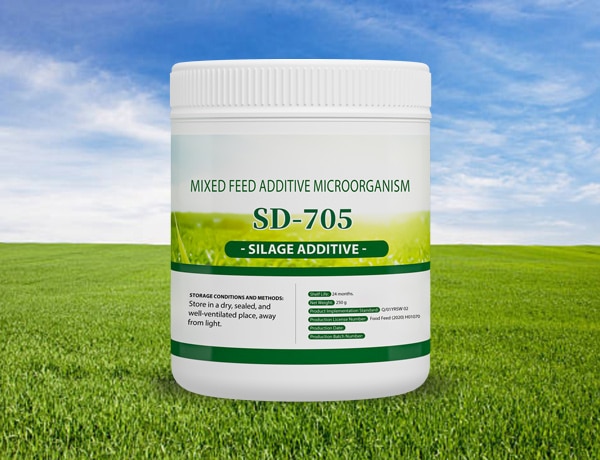
Modern silage additives like SD-705 go beyond improving fermentation — they also help control moisture biologically. Through the synergistic action of beneficial microbes such as Lactobacillus buchneri, Lactobacillus plantarum, and Pediococcus pentosaceus, these advanced formulas maintain the ideal water activity level inside the bale or silo. They prevent spoilage in wet silage, reduce reheating in drier materials, and stabilize texture and aroma throughout storage. By keeping a balanced fermentation environment, moisture control additives ensure consistent feed quality, higher aerobic stability, and stronger livestock performance.